Knowing how to eliminate termites permanently is a challenge for anyone who has dealt — or still deals — with this silent pest that attacks from the inside out, feeding on the cellulose present in wood and compromising furniture, doors, and entire structures.
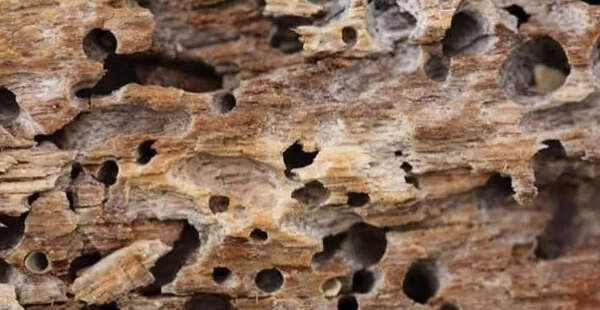
When signs appear — such as holes, dust, loose wings, or hollow wood — the problem is already established. To eliminate the insect, it is essential to use termite-control products with deep penetration, capable of reaching the colony and maintaining residual action for years, in addition to adopting some preventive care in your home routine.
In this guide, JIMO specialists explain everything you need to know: how to identify the main types of termites — such as drywood termites and subterranean termites — and follow simple steps to ensure long-lasting wood protection and furniture protection.
What are termites?
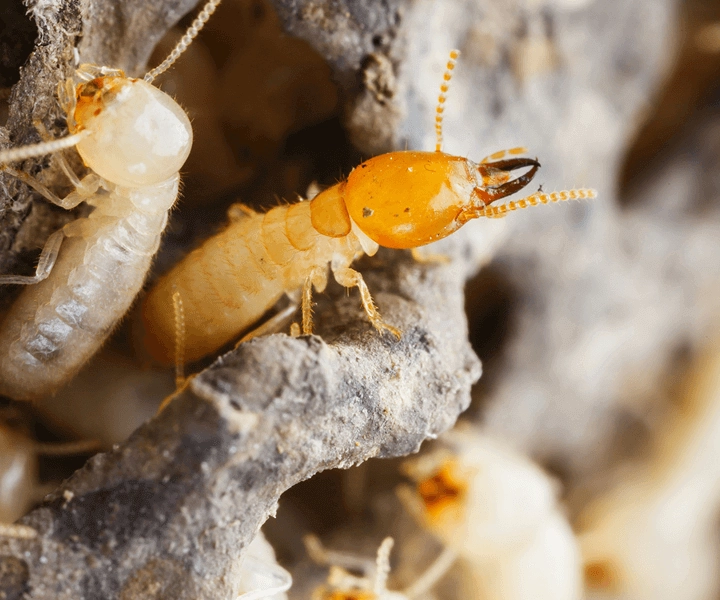
Termites (cupins) are xylophagous insects (from Greek xýlo = wood and phagein = to eat) of the order Isoptera, known for their ability to silently and persistently destroy wooden structures.
They feed mainly on cellulose, present in furniture, books, wood structures, cardboard, and even natural fabrics.
This process is only possible because termites host symbiotic microorganisms — such as protozoa and bacteria — in their intestines, which break cellulose molecules into glucose.
The glucose is then fermented into short-chain fatty acids, such as acetate, propionate, and butyrate, feeding the termite and releasing carbon dioxide and hydrogen that nourish the symbionts.
Although dozens of species exist, not all attack urban environments — and it is important to know the most common types to properly combat the infestation. According to Leonardo Linck, chemist and R&D director at JIMO:
Most residential infestations are caused by drywood termites. They live directly in the wood, form small colonies, and remain well-hidden, which makes control difficult. Subterranean termites, on the other hand, nest in the soil and build tunnels to access the wood in buildings, with much larger and more aggressive colonies.
Is a wood borer a type of termite?
No, “broca” (wood borer) is a term used to identify several species of beetles from the Cerambycidae family, belonging to the order Coleoptera. They are popularly known as longhorn beetles.
The name “serra-pau” comes from the fact that their larvae drill and carve tunnels in the wood as if they were “sawing” the trunk or dry wood.
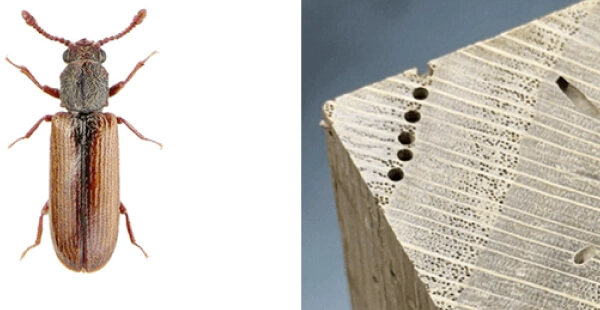
The female deposits the eggs in cracks, crevices, or directly on the surface of the wood (living or dead). Incubation occurs in a few days or weeks depending on environmental conditions. The larva hatches and begins drilling and excavating galleries inside the wood.
During this stage, the larva causes the most severe damage as it feeds on cellulose and wood.
The larval stage may last for months or even years depending on the species and type of wood. After completing its development, the larva enters a pupal chamber (usually inside the wood).
It then transforms into an adult (complete metamorphosis). The adult beetle emerges from the wood through an oval or circular hole. Therefore, when holes are noticed, the insect is no longer inside the wood and the damage has already been done.
Thus, curative treatment applied directly to the holes is not effective, as there are no insects left. Since it is not possible to identify larval presence inside the wood, the appropriate treatment is preventive.
Most common types of termites
There are more than 2,500 known species of termites worldwide, but only a small portion poses a direct threat to buildings and urban furniture.
However, according to Embrapa Florestas, these pests have become increasingly common in urban areas due to factors such as cellulose accumulation, moisture, poorly ventilated structures, and the presence of host trees near buildings.
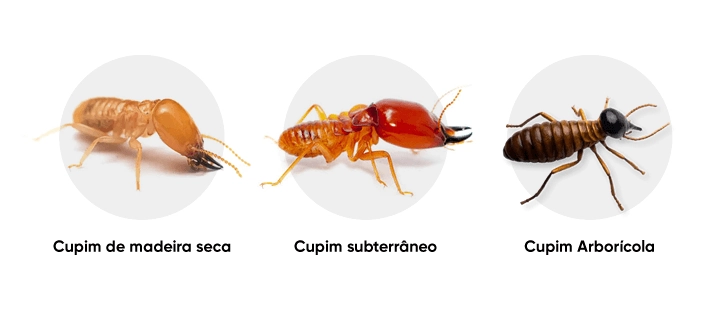
To correctly identify and combat the insect, check out the three main types below:
1. Drywood termite
These are the most frequent in homes and apartments. They live inside the wood itself and do not require contact with soil or external moisture. They are silent and difficult to detect, appearing only when the structure is compromised.
As emphasized by Leonardo Linck, chemist and technical R&D director at JIMO:
The biggest challenge is that consumers do not always know which type of pest is attacking. That’s why JIMO products are designed to offer deep penetration, residual action, and different application methods to suit various infestation levels.
2. Subterranean termite
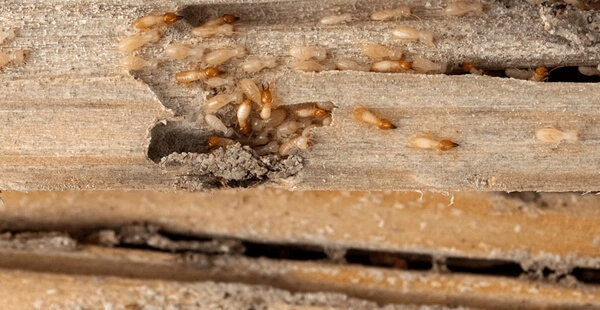
They form large colonies, usually outside the furniture or structure, and access the wood through tunnels (or “mud tubes”) built from soil or damp walls. They are highly destructive and require immediate control.
3. Arboreal termite (less common indoors)
This type builds visible nests, usually in trees, and may eventually migrate to nearby structures. They are less common indoors but can attack roofs or ceilings in houses near vegetation.
White termite and flying termite: what’s the difference?
Although belonging to the same insect, the “white” type and “flying termite” (aleluia) represent different stages of the termite life cycle — and understanding this difference is essential for effective control.
The white termite is the worker, which lives hidden inside the wood or structure.
It is responsible for excavating tunnels, consuming cellulose, and maintaining the nest. It is the main destructive agent but is rarely seen because it operates in protected internal areas.
The flying termite (or “alate”) is the reproductive form. It appears at certain times of the year, usually after rain and on warm, humid days, flying in swarms in search of new locations to form colonies.
After the flight, these insects lose their wings and form reproductive pairs, starting a new infestation.
Do termites pose a health risk?
No. There is a recurring concern about possible contamination or even bites, but in this case, the greatest danger is structural damage.
Termites excavate internal tunnels, weakening doors, furniture, and even support beams. If the infestation is not detected in time, the damage can be irreversible — and costly.
They are not dangerous from a toxicological point of view, meaning they do not pose a health risk, but their indirect impact is significant.
In addition to material damage and possible allergic reactions, infestations can cause insecurity in houses, apartments, or older properties — not to mention the loss of furniture or even larger structures such as roofs.
How to identify an infestation?
Before applying any product, it is important to recognize the signs of an infestation.
The most common termites in urban areas are drywood and subterranean termites, and each type behaves differently.
Main signs of termites:
- Small holes in wood, with small granules around or on the floor (these are fecal residues);
- Hollow or fragile wood when tapped;
- Presence of loose wings (especially after swarming events);
- Mud tubes on walls and baseboards (indicating subterranean termites).
Identifying termites is always challenging due to their nature. As Leonardo Linck explains:
This pest does not give easy warning signs. When a piece of furniture becomes hollow or brittle, it usually means the attack has been going on for some time. That’s why we emphasize that prevention is the best approach.
What attracts this wood-eating insect indoors?
Termites search for cellulose and shelter. They live protected from light inside wood (they are lucifugous) — but during swarming, the winged forms may fly toward light sources and enter the property.
They are not selective: any untreated wood, new or old, can be attacked. Furniture, baseboards, door frames, built-in cabinets, and beams are common targets. For many species, dry wood is the main food source.
Environmental conditions favor infestation. Drywood termites do not depend on external humidity. Subterranean termites obtain moisture from the soil, where they build their nests, accessing the building through tunnels — so they often do not remain only inside the house.
Cellulose-rich materials such as stored paper and cardboard also help keep pests active, especially in poorly ventilated areas.
External sources are another important factor: even in clean homes, termites can arrive from infested trees, soil, or neighboring buildings, especially during swarming.
How to eliminate termites?
Eliminating termites requires the use of termite-control products with proven action.
Home remedies such as vinegar, kerosene, or orange oil may momentarily suppress the focus, but they do not eliminate the colony or prevent reinfestation.
According to chemist Leonardo Linck, the secret lies in reaching the interior of the wood and breaking the insect’s biological cycle:
It is not enough to kill visible termites. Effectiveness depends on reaching the colony and maintaining a residual effect that continues acting for a long time. That is why products from the JIMO Cupim line are formulated with deep-penetrating ingredients that reach the wood’s internal veins.
There are different formulations and applications for the so-called “termite killers.” See below how to choose and which offers the best effectiveness.
What is the most effective termite treatment: types and applications
Products designed to eliminate termites must penetrate deeply into wood fibers, reach the internal galleries where termites live, and ensure prolonged action to prevent reinfestation.
Among the most common market options are:
- Aerosol insecticides: recommended for visible and localized infestations. They are easy to apply and work well on affected furniture, door frames, and baseboards;
- Liquid products (termite-control): ideal for larger areas or hidden infestations. They can be applied with a brush, sprayer, or by immersion.
With so many options, the question arises: which product is most effective in combating termites and protecting wood? The answer lies in chemical composition and application method.
Below we explain the JIMO differentials, which offer solutions in aerosol, liquid, and water-based formulations for every type of need.
JIMO Cupim Line: complete protection
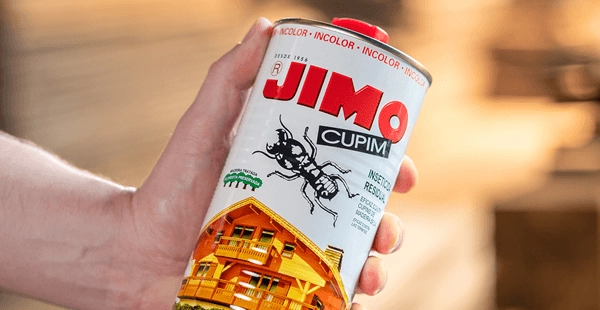
With more than 70 years of experience in home solutions, JIMO has developed a complete line of termite-control products that combine proven efficiency, application safety, and ease of use. According to the brand’s chemist and R&D director, Leonardo Linck:
The main advantage of products from the JIMO Cupim line is their penetration power. Our formulas include carefully selected solvents that carry the active ingredient deep into the termite tunnels within the wood, ensuring truly effective treatment.
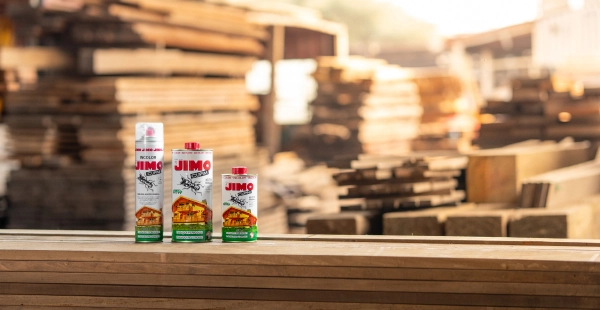
Check out the products in the portfolio:
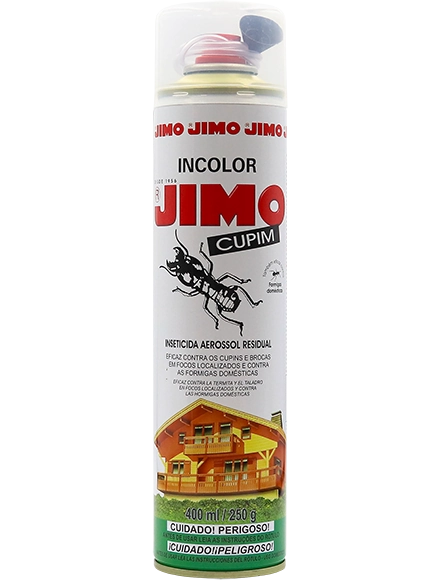
JIMO Cupim Aerosol
A practical solution for targeted applications. Recommended for furniture, shelves, baseboards, and locations with visible infestation. Comes with an extension tube to facilitate internal application inside wood holes.
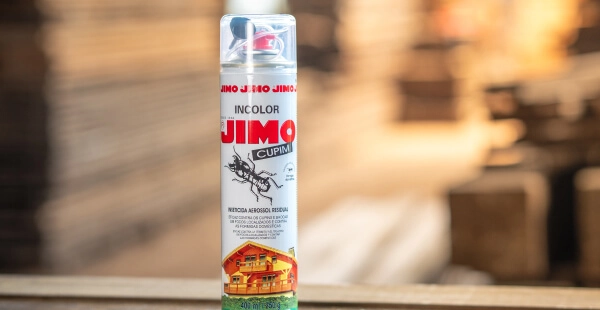
The JIMO Cupim Aerosol features an extension tube that helps reach the interior of the wood, which is essential for product effectiveness.
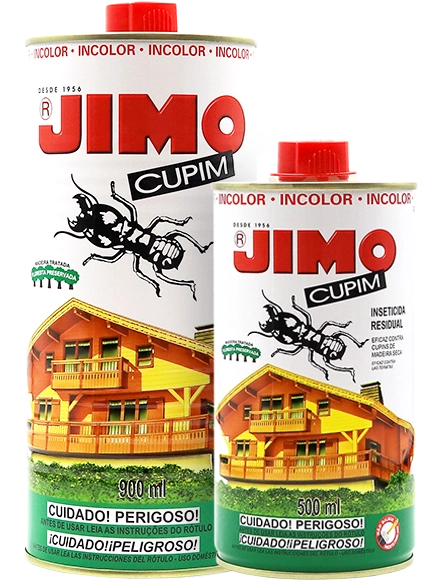
JIMO Cupim solvent-based
JIMO Cupim solvent-based is recommended for preventive and corrective treatments in wooden structures and furniture already attacked or at risk.
Its formula has high penetration power, allowing the active ingredient to reach the wood’s internal channels and eliminate termites where they actually are.
Currently, there are four versions designed for different types of applications:
JIMO Cupim solvent-based 500 ml and 900 ml
Ideal for targeted applications and small repairs, such as shelves, frames, furniture legs, or areas where the attack is concentrated.
The intermediate version, 900 ml, is perfect for larger furniture, built-in cabinets, or areas with visible infestation.
Learn more: JIMO Cupim Base Solvente – protects wood, protects history.
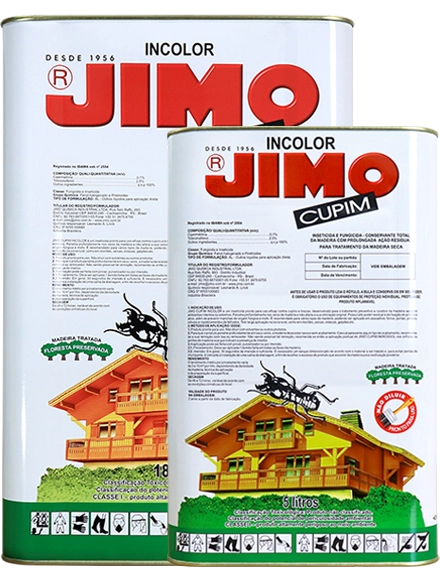
JIMO Cupim solvent-based 5 L and 18 L
Recommended for those who need to treat several areas in the home, such as doors, frames, baseboards, and large furniture pieces. It can be applied with a brush, roller, or sprayer.
The 18-liter packaging is mainly intended for professional use, ideal for large-scale treatments in warehouses, depots, carpentry shops, and construction sites. It is the recommended choice for specialized companies or broader renovations.
The choice of packaging depends on the infestation level and area size. The solvent-based version offers prolonged action and excellent penetration — the larger the volume, the larger the area that can be protected or restored.
Learn more: JIMO Cupim Base Solvente 5L/18L: Protects wood
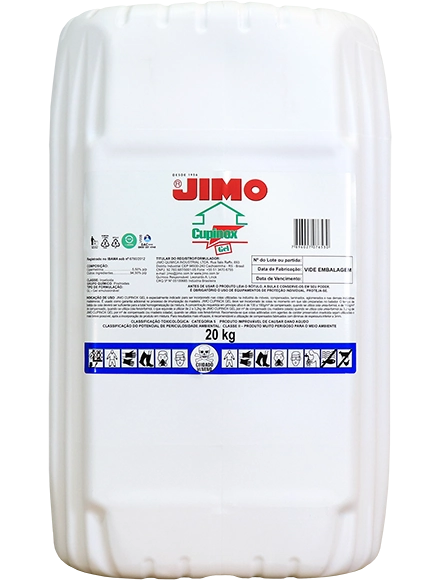
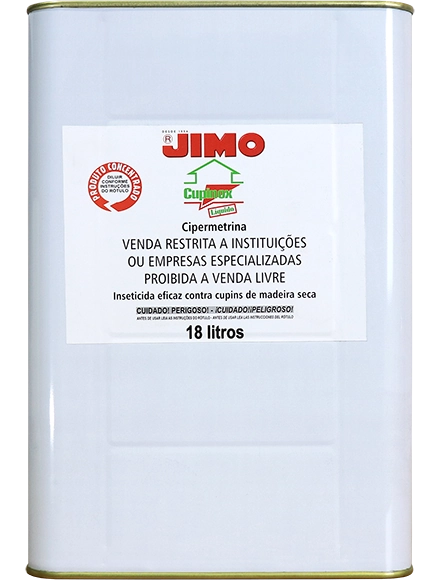
JIMO Cupinox Liquid and Gel
The Cupinox line consists of termite-control products sold only to professional entities. They are not part of the retail line.</span>
Cupinox Liquid is a preventive and curative insecticide effective against drywood termites. Sold as a concentrate for dilution in solvent and applied by brushing, spraying, or immersion.
Must be handled by trained professionals.
Cupinox Gel is an insecticide for prevention and termite control in engineered wood. It is designed to be incorporated into glues used in the furniture, plywood, laminates, particleboard, and other wood-related industries, and must be handled by trained professionals.</span>
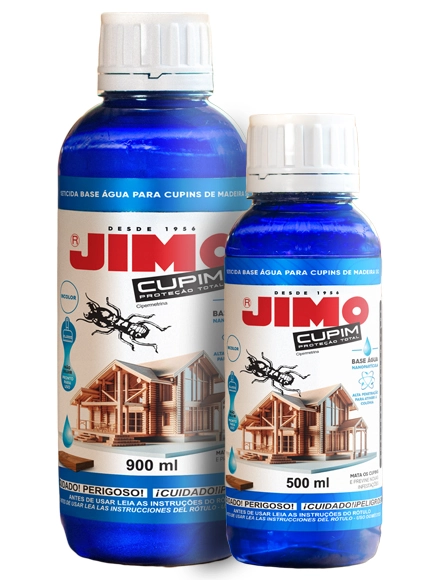
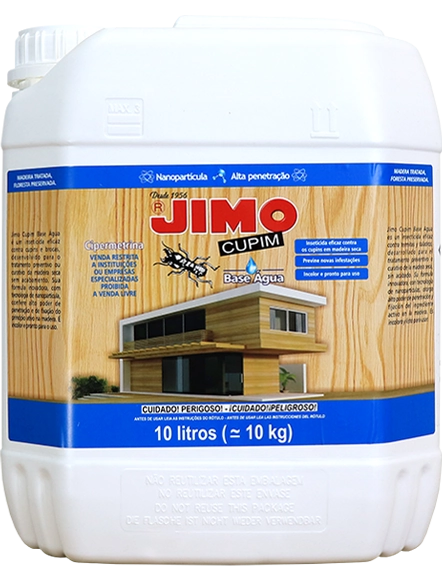
JIMO Cupim Water-Based
The newest solution in the portfolio, with a gentler formula and no strong solvents. Recommended for locations with low ventilation or when there is sensitivity to odors. Despite being softer, it maintains high effectiveness against termites.
With options for different contexts and types of infestations, the JIMO Cupim line provides solutions for those who need to eliminate the problem safely and efficiently.
In addition to deep-penetration technology, the brand’s products are developed to ensure prolonged residual effect — preventing reinfestation while being easy to use.
How long does JIMO Cupim last?
JIMO Cupim offers long-lasting effect, especially in the solvent-based versions. Its residual action provides protection for years, as long as the application is done correctly and the wood does not undergo sanding or cuts that remove the treated layer. This duration may vary depending on the wood type, infestation level, and environmental conditions (such as humidity or exposure).
According to Leonardo Linck, chemist and R&D director at JIMO:
When applied correctly, JIMO Cupim has long-lasting residual effect due to its ability to penetrate deeply into the wood. It remains active in the internal channels, protecting against new infestations even months or years later.
Therefore, it is ideal to always follow usage guidelines.
How to correctly apply termite treatment on already-infested furniture and structures
Product effectiveness depends on how it is applied. First, it is necessary to identify active infestation points and prepare the area:
- Locate the infestation points: observe holes, dust, hollow or fragile areas;
- Lightly drill the wood (if necessary) to facilitate product penetration;
- If there is a finish (paint, wax, or similar), it must be removed because it blocks penetration;
- Apply the product according to the label — using the extension tube (aerosol), brush (liquid product), or sprayer.
- Allow the product to dry before reusing the treated item. Ventilate the area to aid drying.
The product needs to enter the wood. If it does not penetrate, it will not reach the colony. That’s why correct application is important — and repeating the process may be necessary, as noted by Leonardo Linck.
Is termite treatment toxic to humans?
Termite-control products like JIMO Cupim must be used with caution, following label instructions and respecting the recommended ventilation periods. According to Leonardo Linck, chemist and R&D director at JIMO:
JIMO termite-control products are safe when used as directed. The aerosol, for example, was developed for localized use and should not be applied excessively. The liquid product requires ventilation time after application, especially in closed spaces. The smell is characteristic but disappears with proper airing.
The specialist also reinforces that children and pets should not remain in the treated area during application nor come into contact with recently treated wood. Reentry should occur only after the recommended drying time.
For those seeking lower odor or more comfort, the JIMO Cupim Base Água may be a more comfortable alternative.
3 steps to protect wood against new attacks
Even after eliminating the infestation, it is essential to protect the wood in the long term. The best preventive method is the periodic use of termite-control products with residual action and maintaining well-ventilated, well-lit environments.
Check these 3 recommendations:
- Conduct periodic inspections on furniture, dark corners, and areas with exposed wood, looking for signs such as fecal residues, loose wings, and others previously mentioned;
- Apply JIMO Cupim to new or restored furniture to ensure long-lasting protection;
- Use JIMO Cupim on baseboards and frames as a preventive barrier during renovations or moves.
Following this care routine helps protect furniture and house structures from this silent danger.
Conclusion
Eliminating termites requires more than improvisation. It demands precision, technical knowledge, and products developed specifically for this function.
The JIMO Cupim lines and JIMO Cuida da Madeira offer effective solutions for every type of infestation, with deep-penetration technology and prolonged action.
Whether to eliminate localized infestation points, treat larger structures, or prevent new attacks, JIMO offers safety, practicality, and reliability — present in Brazilian homes for over 70 years.
Practical solutions for your home
JIMO offers products designed to make your daily life easier, with options for different application types, insects/pests, surfaces, and environments.
Find the ideal products to simplify your daily routine.