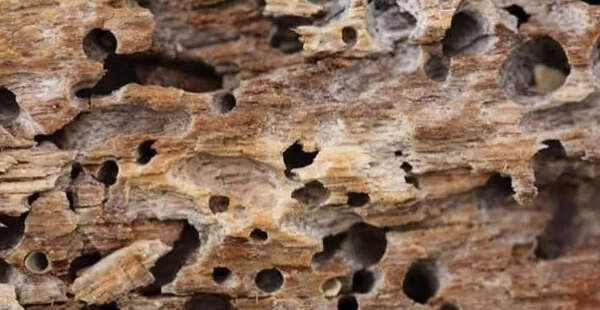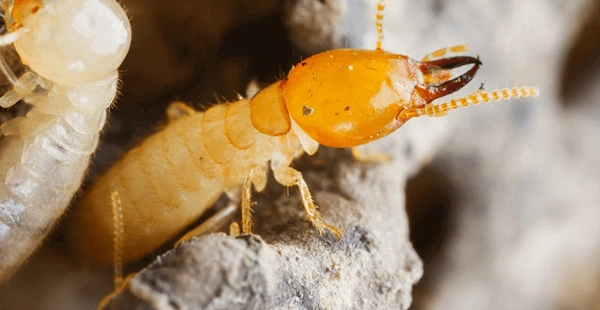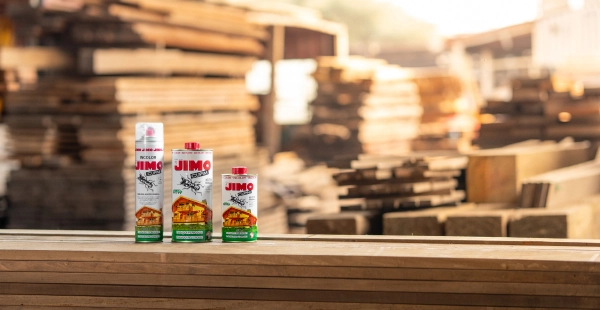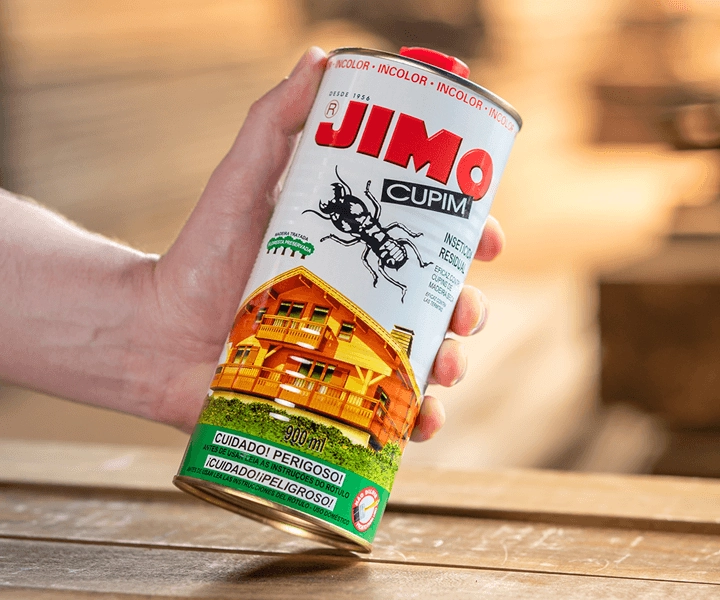
Termites are among the most destructive urban pests because they cause silent and continuous damage, compromising joints, deforming structures, and shortening the lifespan of doors, panels, and furniture.
In many cases, the problem only appears during renovations, when sanding or dismantling pieces, as small flaws reveal old attacks.
To avoid this type of damage, the termite killer, a product specialized in combating and preventing this pest, should be prioritized as part of the technical care for wood.
Integrated into surface preparation and the finishing schedule, preventive treatment ensures long-lasting protection. Applying it before finishing the piece and performing periodic inspections is the most effective way to reduce rework, avoid costly replacements, and preserve property value.
What is a termite killer?
The termite killer is an insecticide specifically for termites, formulated to penetrate the grain of the wood and reach the internal galleries where the colony develops. Unlike improvised solutions, it ensures long-lasting residual effect, protecting the structure even months or years after application. According to Leonardo Linck, chemist and R&D director at JIMO:
The major advantage of the termite killer is reaching the internal tunnels of the wood. It’s not enough to eliminate visible insects: it’s necessary to interrupt the colony’s cycle and maintain residual effect to prevent new infestations.
This type of treatment is essential because termites act hidden inside, making early identification difficult. Only a targeted product can interrupt the pest’s cycle and prevent new outbreaks.
Types of termite killers and where they work best
Not every infestation requires the same treatment. The choice depends on the size of the area, the level of infestation, and environmental conditions. Check below the main product formats and how to make the most of them:
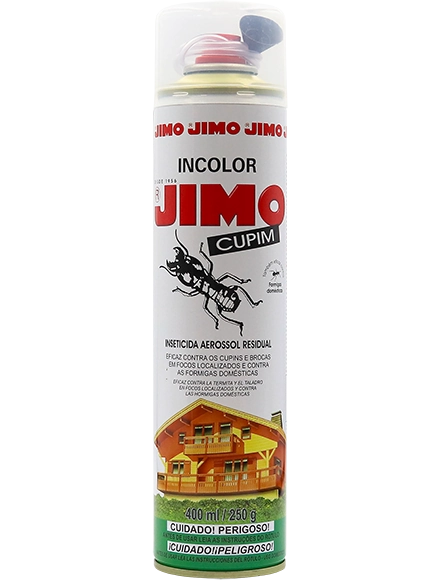
Aerosol — targeted action:
Indicated for holes and visible galleries in furniture, baseboards, and doorframes. The extension tube carries the product into the wood, but its use is limited to localized infestations.
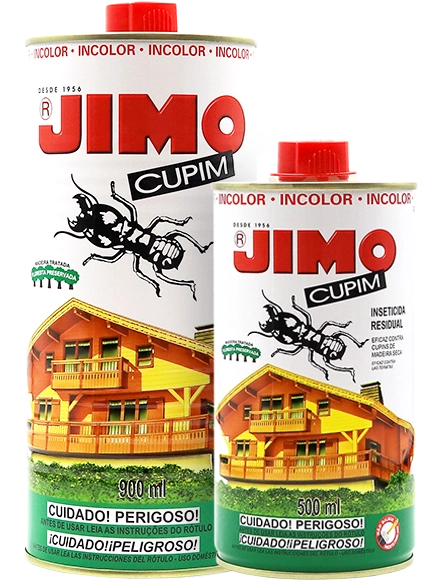
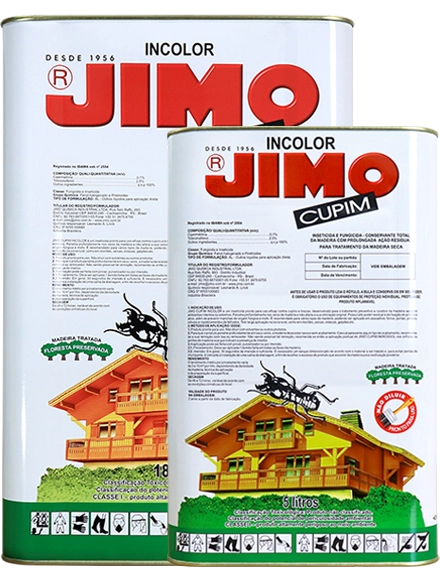
Solvent-based — furniture and structures:
Ideal for doors, cabinets, and large areas. Applied with a brush, roller, or sprayer until the wood is saturated, it offers high penetration and prolonged protection. Available in versions for small repairs or large-scale applications.
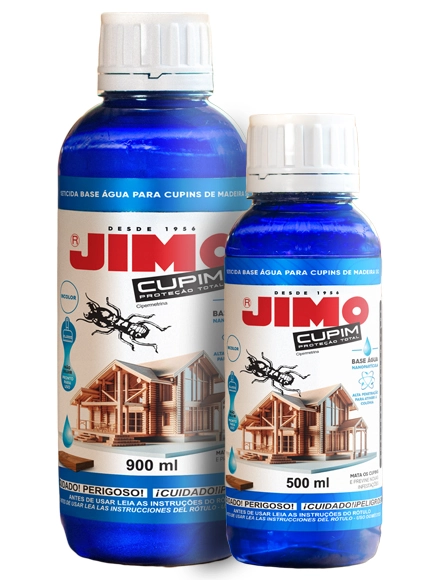
Water-based — indoor environments:
Recommended for bedrooms and low‑ventilation living areas, it combines effectiveness with low odor. Requires proper surface preparation to maintain performance.
Professional use — engineered wood:
Engineered wood is the name given to wood-based materials that go through industrial processes to gain more resistance, stability, and performance than solid wood. Main types:
- Plywood: sheets glued in cross layers;
- MDF: fibers bonded with resin under pressure;
- OSB: long oriented and glued strands;
- LVL: parallel laminated veneers used in beams;
- CLT: cross‑laminated panels widely used in construction;
- Glulam (MLC): beams formed by glued laminates, ideal for large spans.
These materials are intended for woodworking and industrial use, applied with specific adhesives and processes. Handling must be done by trained professionals.
JIMO Cupim line: solutions for every need
JIMO has developed a complete line to meet different scenarios:
- JIMO Cupim Aerossol: practical for visible galleries, with an extension tube that delivers the product directly into cavities.
- JIMO Cupim Base Solvente (500 mL to 18 L): deep penetration and residual effect, recommended for furniture, doors, and larger structures.
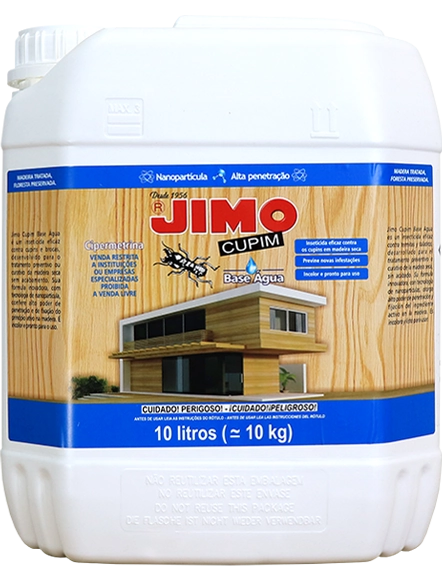
- JIMO Cupim Base Água: an option for indoor environments, effective against termites and comfortable to apply in low‑ventilation areas.
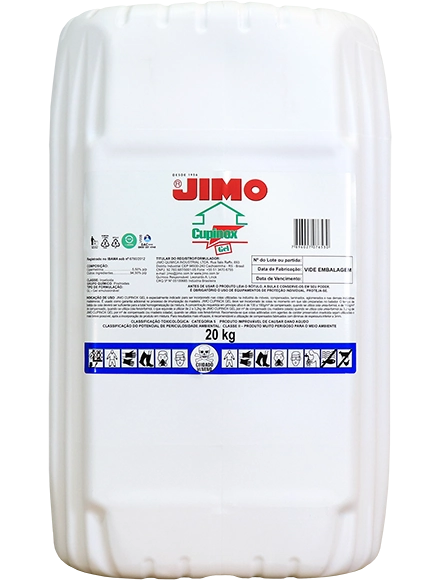
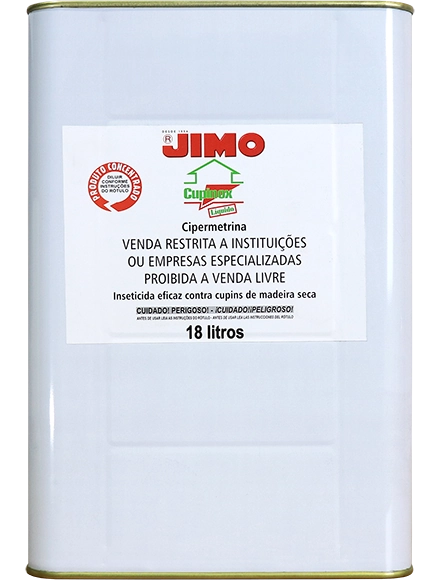
- JIMO Cupinox (liquid and gel): industrial use, exclusive for woodworking shops and engineered‑wood, plywood, and laminate factories.
In all versions, the brand’s differential lies in deep penetration technology and residual action, which keeps the wood protected for longer.
See also: Care for wooden furniture, doors, and windows: how to preserve and prevent damage
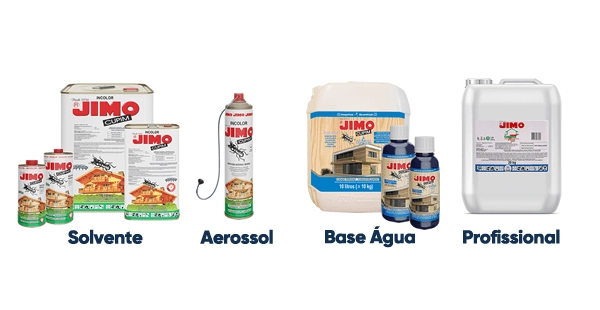
JIMO Cupim Line | Learn more about Jimo Química Industrial LTDA.
How to apply termite killer (step by step)
Correct application is as important as choosing the product. Following the right order increases effectiveness and ensures durability.
- Diagnosis: identify signs such as holes, dust, loose wings, or hollow wood. Assess whether the infestation is localized or extensive.
- Surface preparation: remove paint, varnish, or wax and sand if necessary. Finishes prevent product penetration.
- Format selection: aerosol for visible points; solvent‑ or water‑based liquids for furniture and structures; professional line for industrial use.
- Application: follow the label instructions and respect the interval between coats to ensure absorption.
- Drying and ventilation: keep the environment ventilated until the product is fully dry. Only reenter after the recommended time.
- Post‑treatment: inspect the piece after 15–30 days. If sanding or cutting occurs, reapply in the exposed area.
When applying the termite killer, it’s not only the product that matters, but also how it’s used. Linck emphasizes:
The effectiveness of the treatment depends directly on the application technique. It’s not enough to choose the right product; it is essential to prepare the wood surface by removing layers of paint, varnish, or wax that act as barriers. Only then can the termite killer penetrate the internal grain, reach the galleries, and act where termites actually live. This simple care makes all the difference to ensure residual effect and long-lasting protection.
How to maximize termite killer effectiveness?
For treatment to be effective, it must be applied before finishing. Paints, varnishes, and waxes create a protective layer that blocks product penetration.
The correct order is:
- treat the wood →
- wait for drying →
- finish with the topcoat.
This way, the active ingredient reaches the interior of the piece and maintains residual effect, while the finishing layer preserves the appearance and increases protection against external wear.
Safety and PPE
Applying termite killer requires attention. Always wear gloves, a P2 mask, and safety goggles. Avoid the presence of people and pets during application and respect the reentry time indicated on the label. In low‑ventilation areas, choose the water‑based version, which has lower odor.
Treating safety as part of the process ensures not only product effectiveness but also the well‑being of those living in the environment.
Duration of the effect and maintenance
A well‑applied termite killer creates an invisible barrier against new colonies. This protection can last for years, as long as the wood is not sanded, cut, or excessively exposed to moisture.
For this reason, regular inspections and reapplications in exposed areas are key to maintaining control and preventing reinfestations.
Are termite killers and homemade remedies worth it?
Homemade solutions do not work against termites. Exposing furniture to sunlight does not eliminate the colony, which remains inside the wood.
Mixtures with vinegar, oil, or diesel do not reach internal tunnels and may even damage the piece. Sealing visible holes also does not work, as the infestation spreads through hidden channels.
Only products formulated to penetrate the fibers of the wood provide real protection.
When to call a professional?
There are situations where DIY control is not enough. Infestations of certain types of termites, such as subterranean ones, with soil tunnels between the ground and the structure, require chemical barriers and specific techniques.
Large-scale attacks, such as in roofs or flooring, require proper equipment to reach the entire area. The same applies to fixed, old, or engineered wood pieces that cannot be sanded or dismantled.
In these cases, relying on specialized professionals is essential. They have access to restricted-use products, such as the JIMO industrial line, and apply the treatment safely and effectively.
Other content to explore
In addition to solutions for termites and other pests, the JIMO blog offers various content with tips from our specialists. Learn more:
- Mold on walls: what it is, health risks, and how to prevent it
- How to use the dishwasher correctly? Cleaning, products, and more!
- How to clean glass and make it shine?
Conclusion
Eliminating termites requires more than improvisation. It’s necessary to apply technical knowledge and use products developed specifically for this purpose.
The termite killer works where generic sprays cannot reach: inside the wood, with deep penetration and residual action.
JIMO offers practical solutions for localized points, large areas, indoor environments, and even industrial use, ensuring safety, effectiveness, and durability.
Frequently asked questions:
Does termite killer work on MDF and plywood?
Yes, as long as the surface is unfinished and the application saturates the material.
Is it safe to apply termite killer in bedrooms?
Yes, as long as the area is well ventilated and the label’s reentry time is respected. For greater comfort, choose the water‑based version.
How long does termite killer last?
The effect is long‑lasting when applied correctly and the piece remains intact. Sanding, cutting, or excessive moisture requires targeted reapplication.
Is termite killer harmful to pets?
During application and drying, keep the environment free of people and animals. Ventilate well and respect the label’s reentry time. In bedrooms, prefer the water‑based version.
Practical solutions for your home
JIMO offers products designed to simplify your daily life, with options for different application types, insects/pests, surfaces, and environments.
Find the ideal products to make your day easier.