Neste Artigo 
Neste Artigo
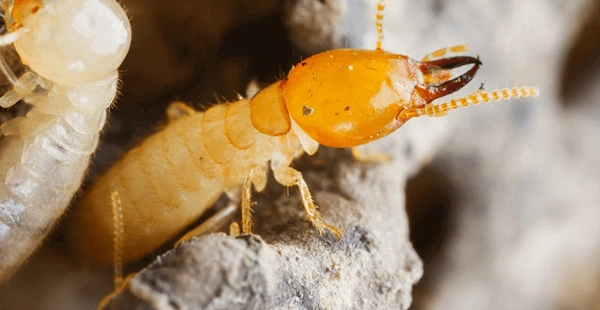
Termites can compromise wooden furniture and structures in a short time. They settle in cracks, internal galleries, and damp areas, advancing silently. Identifying early signs prevents major damage.
When the infestation begins, acting quickly makes a difference. The correct treatment stops the insects’ progress and preserves the wood. Understanding how to get rid of termites in wood helps protect the home and reduce maintenance costs.
This guide presents effective methods to eliminate termites, signs to recognize the infestation, and care tips to keep the wood safe over time.
What causes termites in wood?
Termites appear when they find unprotected wood and discreet shelters. These factors create an ideal environment for the colony to settle and expand within the structure.
They prefer low‑light areas with limited airflow, such as the interior of furniture, baseboards, doorframes, and spots near leaks.
Infestation also becomes more likely when the wood is worn or has compromised finishing. Cellulosic materials such as cardboard boxes increase the availability of food and accelerate the spread of the pest.
Some elements favor the installation of termites:
- constant humidity and untreated leaks;
- cracks and gaps that make access to the wood easier;
- accumulation of paper, cardboard, and cellulosic waste.
Types of wood that are more resistant to termites
Some species of wood have denser structure and composition that make termite attacks more difficult. This is the case of woods such as grápia, ipê, cumaru, peroba, sucupira, imbuia, and garapeira, commonly used in doors, decks, and outdoor structures.
In general, solid woods tend to resist better than composite or very soft woods. Aged pieces with cracks or poor upkeep become more vulnerable, even when they are naturally resistant species.
No wood is completely risk‑free. In damp and poorly ventilated environments, even more durable species may suffer attacks. Therefore, in addition to choosing the right type of wood, it is important to keep maintenance up to date and pay attention to early infestation signs.
How to identify termites in wood?
Correct identification prevents the infestation from spreading and compromising the entire structure. Termites leave characteristic signs that help detect activity even when they are hidden inside the wood. Here are the main ones:
Tiny piles of dust and granular residue
The first sign is usually the accumulation of tiny sand‑like grains or fine dust beneath the furniture or in cracks. The finer residues come from wood excavation, while sand‑like granules come from the droppings of drywood termites.
Hollow or fragile wood
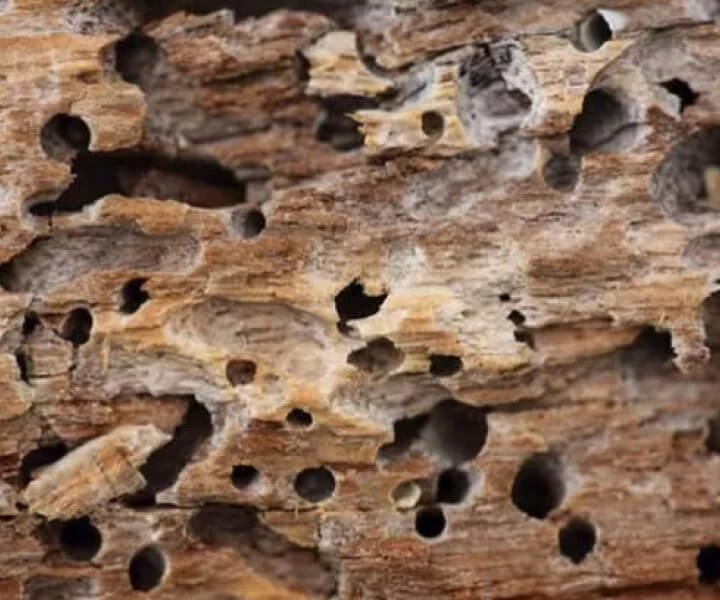
When lightly tapped, the wood may sound hollow. It may also show fragile parts that give way with little effort. This happens because termites consume the structure from the inside.
Small holes and internal galleries
Small aligned holes indicate points of entry and exit for the insects. They reveal the presence of internal tunnels that expand over time and weaken the furniture.
Discarded wings
Loose wings near furniture, baseboards, or corners indicate that swarming has occurred and new termites have settled, starting a colony.
Step‑by‑step guide on how to get rid of termites in wood
Proper treatment prevents the infestation from progressing and compromising the wooden structure. By paying attention to signs and choosing the right product, you can control the problem effectively. See the steps below on how to get rid of termites in wood.
1. Locate all infestation points
Before starting treatment, carefully inspect the furniture or structure. Check the sides, base, inside sections, and areas near leaks. The more accurately you identify the infestation points, the more effective the result will be.
2. Assess the level of infestation (superficial or deep)
Superficial infestations usually show few tiny holes and small piles of residue. Deep infestations leave the wood hollow with several internal tunnels. Understanding this difference guides the type of application and the amount of product required.
3. Use the correct product for the type of wood
Treatment depends on the behavior of the pest and the depth of the tunnels. Termite killers ensure proper penetration and continuous action, effectively reaching the colony.
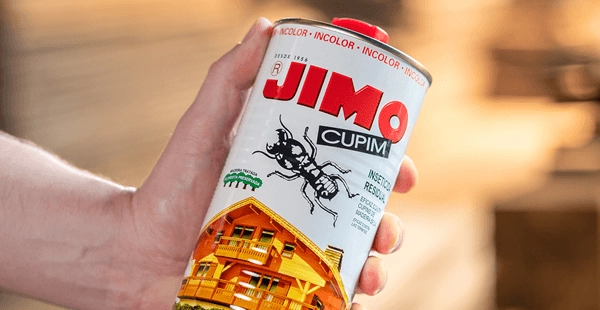
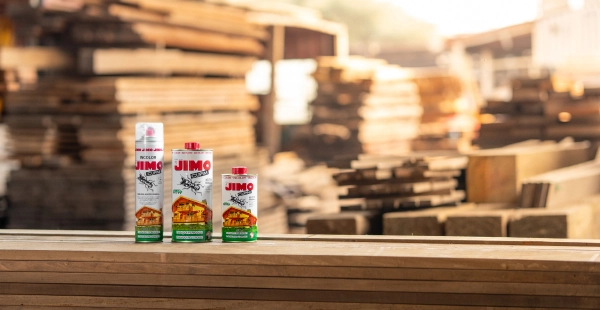
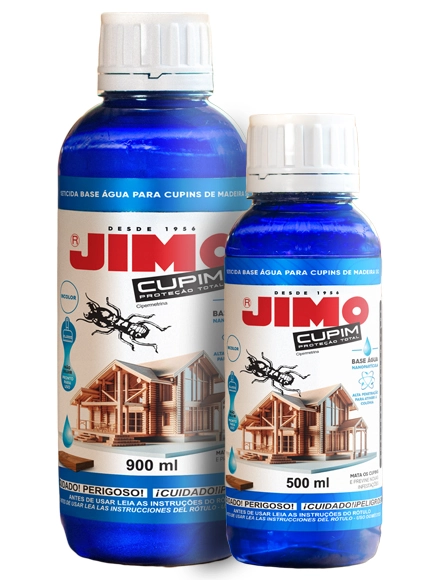
The JIMO Mata Cupim line was developed for this type of situation, with formulas designed to eliminate the insect and protect the wood for longer.
4. Apply safely and according to instructions
Follow the usage instructions on the packaging, respecting action time, proper ventilation, and product quantity. This prevents waste, improves effectiveness, and keeps the environment safer.
5. Repeat treatment when necessary and monitor the area
After the first application, monitor the area for a few days. If signs of activity remain, repeat the process until the colony is completely eliminated. Monitoring the area in the following weeks helps prevent reinfestation.
JIMO solutions to treat and protect wood against termites
Choosing the right product makes a difference. The JIMO Mata Cupim line offers options for different situations, from small infestation points to large structures that require deeper treatment:
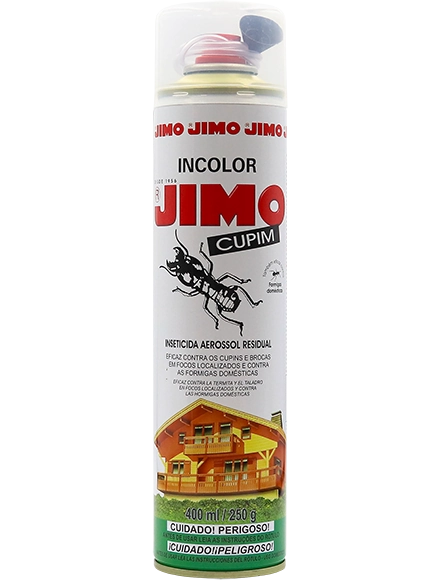
- the JIMO Cupim Aerossol is useful for localized points. The applicator tube carries the product into internal galleries where the insect settles;
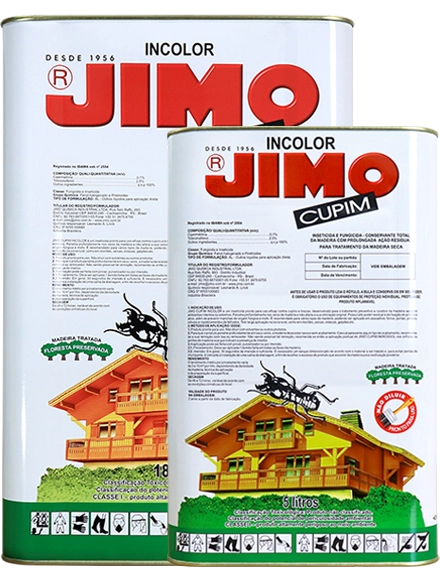
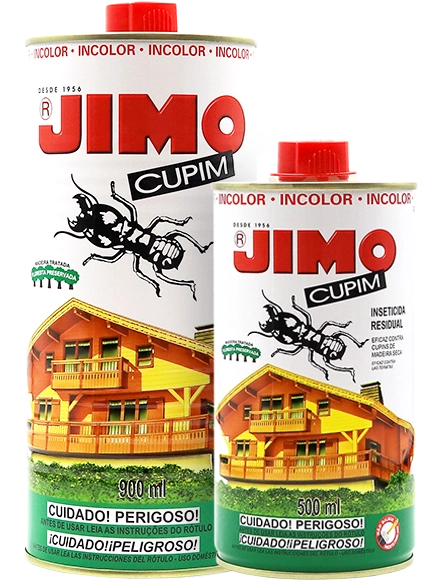
- the JIMO Cupim Base Solvent works on dry wood and ensures deep penetration. The larger volumes are suitable for broad areas such as roof structures and ceilings, maintaining residual action;
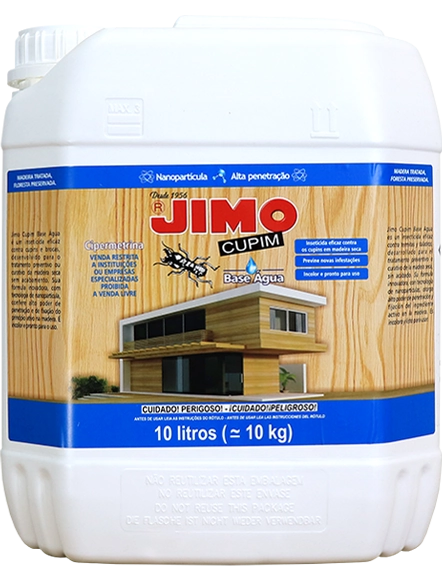
- for those seeking a water‑based formula, the JIMO Cupim Base Water works well for indoor and outdoor environments, including large surfaces that require uniform treatment;
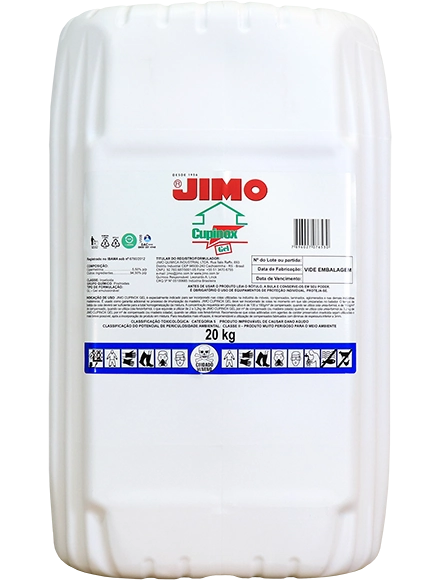
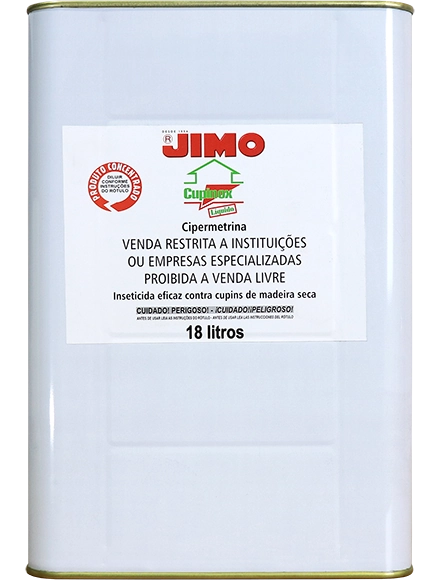
- the line also includes JIMO Cupinox Gel and JIMO Cupinox Liquid. The gel is an innovation in the category and allows precise application without dripping. Both are recommended for use in glue preparation for the manufacture of plywood, MDP, and MDF, ensuring uniform protection of the wood against termites and borers.
This variety allows adapting the treatment to the type of wood, the shape of the piece, and the intensity of the infestation.
How to prevent termites in wood?
Prevention keeps wood protected over time and reduces the risk of new infestations. With a few simple precautions, it is possible to slow down the insects and preserve furniture and structures.
Keep the wood treated and well finished
Control begins with treating the wood with JIMO‑specific termite protection products. After this, varnishes, paints, and sealers help reduce cracks and gaps, providing additional protection. This sequence is especially recommended for furniture such as cabinets, shelves, tables, and TV stands.
Remove food sources and waste accumulation
Cardboard boxes, books stored directly on the floor, and storage materials attract termites. This is common in rarely accessed areas such as basements, closed rooms, and storage spaces. Keeping these environments dry and organized reduces the risk of colony installation.
Inspect furniture and baseboards regularly
Check solid wood furniture, built‑in cabinets, shelves, and baseboards regularly. Signs such as granules (fecal residue), new holes, and discarded wings indicate early activity. Identifying these signs early makes control easier and prevents major damage.
Can termite‑infested wood be recovered?
Recovery depends on the depth of the damage and the extent of internal galleries. In many cases, treatment eliminates the insects and allows the piece to be restored, but some structures lose strength and are no longer safe.
Restoration is viable when:
- the infestation is recent and the damage is concentrated on the surface;
- the wood remains firm to the touch and does not show extended hollow areas;
- treatment completely eliminates activity, allowing reinforcement or new finishing.
Replacement is safer when:
- the structure is weakened and collapses easily;
- internal galleries have compromised essential parts of the furniture or support structure;
- the risk of recurrence is high even after treatment, indicating irreversible wood loss.
Care and points of attention when combating termites
Home remedies such as vinegar mixtures are commonly used to eliminate termites in wood. These methods have very limited action because they depend on direct contact with the insect. They have no residual effect and do not reach the colony, which remains protected inside the wood.
When the infestation is extensive, affects multiple furniture pieces, or compromises fixed structures, it is important to consider professional support. In advanced cases, professional termite control ensures complete inspection, correct application, and reduced recurrence risk.
For moderate situations, proper use of JIMO products offers safe and effective treatment.
Keep your home’s wood protected for longer
Termite control begins with correctly identifying signs and choosing appropriate treatment. When the problem is resolved early, the wood remains safe and damage is minimized. Prevention complements this protection.
Solutions in the JIMO Mata Cupim line offer options for different scenarios, from small infestation points to large structures requiring deep application. Each product meets a specific need and reinforces wood protection over time.
With attention to detail and proper product use, your environment remains safer and more resistant to infestation.
Frequently asked questions about termites in wood
What kills termites the fastest?
Products specifically developed for wood treatment ensure better penetration and reach the internal galleries where the colony settles. Proper use speeds up elimination and prevents recurrence.
What attracts termites into the house?
Moisture, open gaps, and unprotected wood make it easier for insects to enter. Accumulation of cardboard and cellulosic materials also favors infestation.
What smell repels termites?
Some scents may temporarily repel them, but they do not eliminate the colony. Effective control depends on proper treatment and application to all infestation points.
How do I know if termites are still active?
Fine dust, new holes, and hollow‑sounding wood indicate recent activity. Discarded wings near the furniture also show that swarming has occurred.
How long does it take for termites to destroy wood?
Speed varies depending on the type of termite, the type of wood (softer woods such as pine are consumed more easily), and the size of the colony. In fragile structures, damage may appear within weeks, especially when untreated.
Practical solutions for your home
JIMO offers products developed to make your daily routine easier, with options for different application types, insects/pests, surfaces, and environments.
Find the ideal products to make your day easier.