Neste Artigo 
Neste Artigo
Glossary of wood: main terms and applications
Wood is a natural resource with high commercial value and countless applications. But to ensure its proper use and protection, it is essential to understand the most common technical terms.
Below you will find a glossary with the main concepts related to wood, its structure, threats and preservation methods.
Main terms in the wood glossary
Particleboard
Board or panel made of wood particles bonded with synthetic resin and pressed at high temperature and pressure.
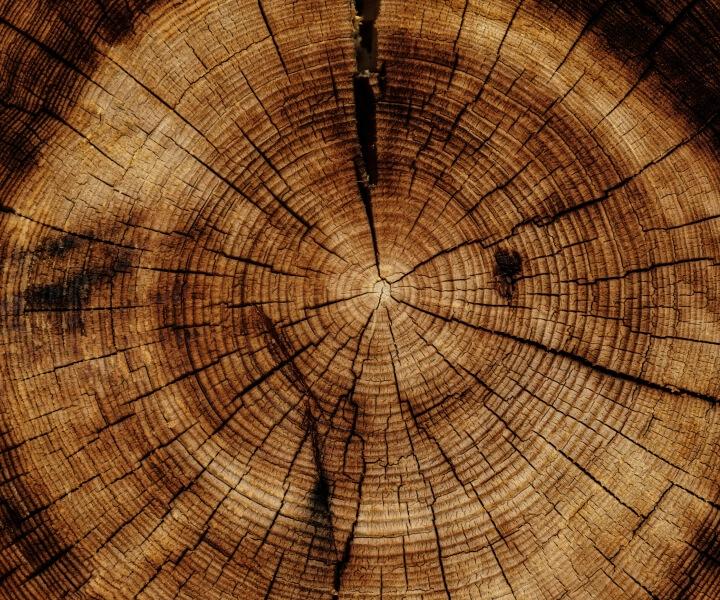
Sapwood
The outer and lighter part of the wood, formed by living cells. This is where fungi and insects usually settle first.
Wood decay
Deterioration caused by decay fungi that affect the physical and mechanical properties of wood.
Biodegradation
Changes caused by fungi, insects or other living organisms. It is the main cause of loss in untreated wood.
Wood‑boring beetle
Insect of the order Coleoptera (beetles) that drills into wood to feed and reproduce.
Full‑cell process
https://www.jimo.com.br/en/?p=34535Wood treatment in an autoclave in which: initial vacuum, pressure and final vacuum are applied.
Empty‑cell process
Wood treatment in an autoclave in which: pressure and final vacuum are applied.
Heartwood
The inner part of the wood, composed of dead cells. It is generally darker and naturally more resistant.
Termites
Social and highly destructive insects of the order Isoptera. They live in colonies divided into castes: reproductives, soldiers and workers. https://www.jimo.com.br/en/blog/mata-cupim/como-acabar-com-cupim-e-proteger-a-madeira-guia-definitivo-jimo/Most common types of termites:
- Drywood termite: lives inside the wood itself.
- Subterranean termite: forms colonies in soil and invades structures.
- Arboreal termite: lives in trees or higher areas of buildings.
Double vacuum
A treatment process similar to the full‑cell method, but with lower pressure. It is suitable only for applying preservative products based on low‑viscosity organic solvents, in situations where limited penetration is sufficient.
Natural durability
Intrinsic characteristic of each botanical species of wood, referring to heartwood resistance to attack by xylophagous organisms (insects, fungi and marine borers).
Hardwoods
Trees with open crowns and broad leaves that may or may not fall in autumn/winter, regrowing in spring.
Fungi
Microorganisms capable of developing on wood, causing staining and/or deterioration of the wood tissues. They include:
- Decay fungi: fungi that use wood components (cellulose, hemicellulose and lignin) as a food source; they cause deep alterations in the physical and mechanical properties of wood;
- Mold/stain fungi: responsible for surface changes known as mold or blue stain.
HDF (High Density Fiberboard)
Fiberboard with mass density greater than 800 kg/m³.
Impregnant
A type of finish that does not form a film, composed of solid pigments and resins, sometimes with fungicide.
Active ingredient
Chemical elements or substances that have preservative action.
Xylophagous insect
Wood‑boring beetles or termites that use wood as a source of food, shelter and/or reproduction.
Laminated wood
Layers of solid wood glued with their grain parallel to the longitudinal direction of the piece. A single layer is called a veneer.
Preserved wood
Wood that contains a sufficient quantity of preservative to significantly increase its resistance to deterioration, prolonging its service life.
MDF (Medium Density Fiberboard)
Fiberboard panel with density between 500 and 800 kg/m³.
MDP (Medium Density Particleboard)
Particleboard panel composed of wood particles bonded with synthetic resin, pressed under high pressure and temperature.
Xylophagous organism
Organism that feeds on wood and/or uses it as shelter and/or reproduction site.
OSB (Oriented Strand Board)
Particleboard panel formed from layers of oriented strands bonded with phenolic resins and pressed for consolidation.
Particle panel
Wood particleboard made from particles agglutinated with thermosetting resin, consolidated under high temperature and pressure.
Plywood panel
Composed of several rotary‑cut veneers, each glued perpendicularly to the next, in odd numbers, ensuring greater stability and superior physical and mechanical properties compared to solid wood.
Reconstituted panel
Panel in which raw wood is processed into chips or fibers impregnated with synthetic resins, such as particleboard, MDF, HDF and OSB.
Penetration
Depth reached by the preservative product in the permeable portion of the wood.
Marine borer
Term used to describe various organisms such as algae, sponges, crustaceans, mollusks, bryozoans and echinoderms capable of boring into materials including shells, rocks and wood.
Pre‑treatment
Application of preservative product on the surface of wood to temporarily protect it during the drying process from fungi and/or insect attack.
Wood preservation
Set of preventive and corrective measures to control biological agents (fungi, xylophagous insects and marine borers), as well as physical and chemical factors that affect wood properties, adopted during development and maintenance of wood components in built environments.
Preservative product
Chemical formulation with defined composition that must present: high toxicity to xylophagous organisms; high penetrability in permeable wood tissues; strong fixation; high chemical stability; non‑corrosiveness to metals; and no negative impact on physical or mechanical wood properties.
Retention
Amount of preservative product introduced and retained in wood.
Moisture content
Amount of water contained in a wood sample, expressed as a percentage of its total mass.
Treatability
Intrinsic characteristic related to a wood species’ permeability to preservative products.
Preservative treatment
Technique for applying preservative products to wood to control biodeterioration caused by xylophagous organisms.
Non‑pressure or surface treatment
Treatment that does not use external pressure to force preservative penetration into wood.
Pressure treatment
Treatment that uses applied pressure to drive preservative deep into the wood.
JIMO products to protect wood
JIMO offers solutions for wood prevention, treatment and finishing, with safe and effective options for different needs:
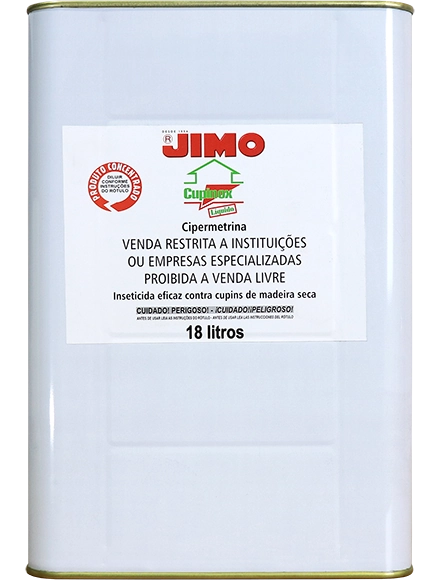
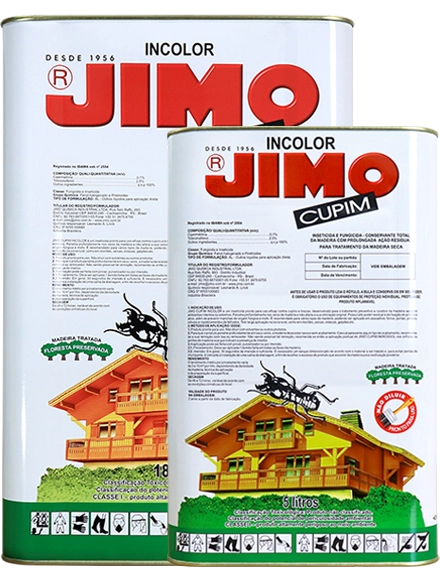
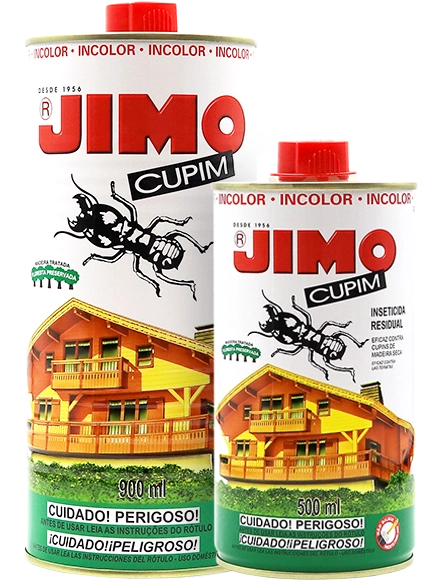
- https://www.jimo.com.br/en/product/jimo-cupim-base-solvente/JIMO Cupim – Preventive and corrective termite treatment.
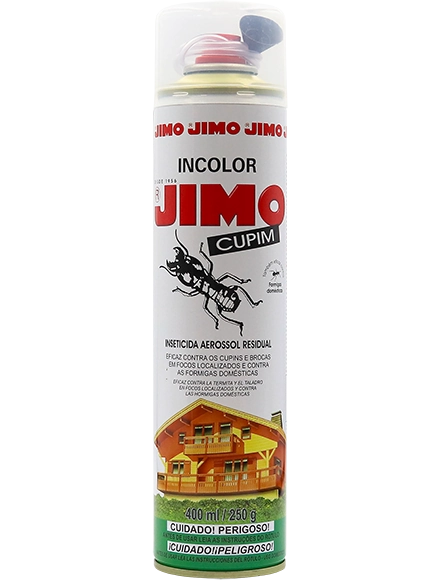
- https://www.jimo.com.br/en/product/jimo-cupim-aerossol/JIMO Cupim Aerossol – Ideal for spot applications and hard‑to‑reach areas.
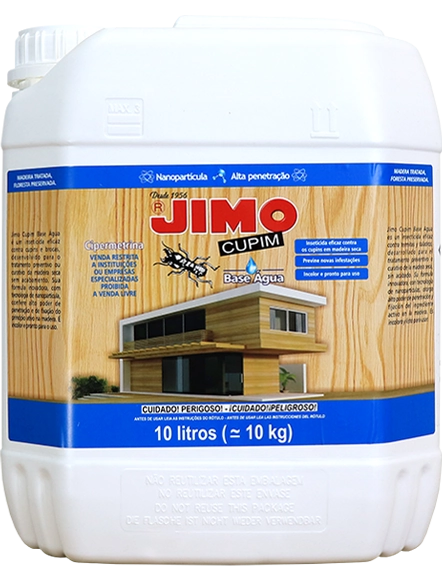
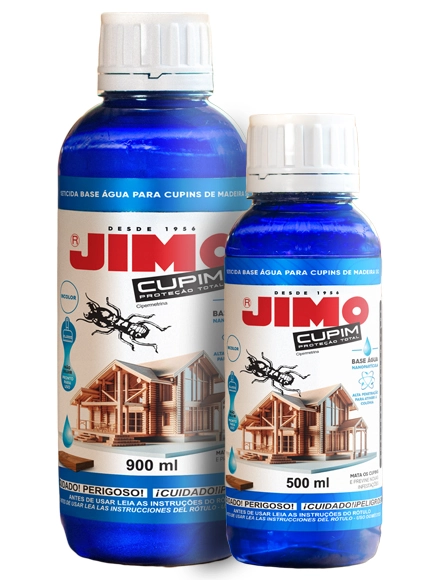
- https://www.jimo.com.br/en/product/jimo-cupim-base-agua/JIMO Cupim Base Água – Less aggressive product with efficient penetration.
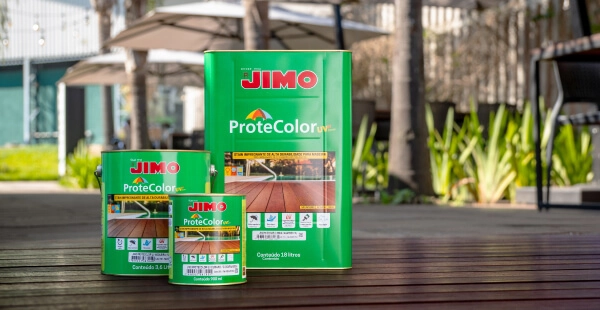
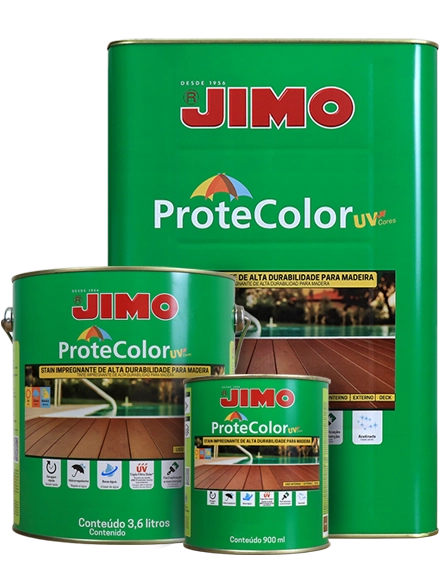
- https://www.jimo.com.br/en/product/jimo-protecolor/JIMO Protecolor UV Cores – Pigmented finish with durable protection.
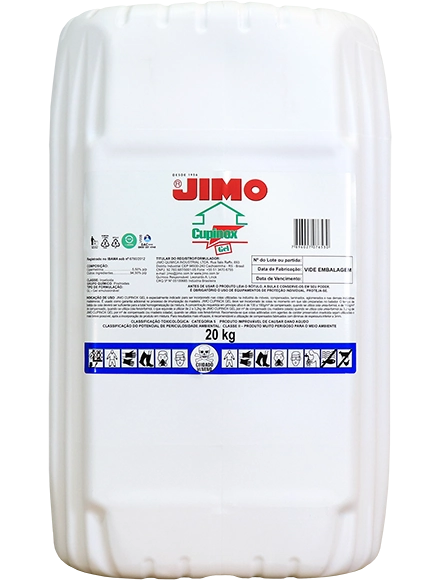
- https://www.jimo.com.br/en/product/jimo-cupinox-gel/JIMO Cupinox Gel – Concentrated professional treatment against termites and fungi.
See: https://www.jimo.com.br/en/produtos/full line JIMO Cuida da Madeira
Practical solutions for your home
JIMO offers products developed to make your daily routine easier, with options for different applications, insects/pests, surfaces and environments.
https://www.jimo.com.br/en/produtos/Find the ideal products to make your daily life easier.