Neste Artigo 
Neste Artigo
Cleaning glass is not just wiping with a cloth. Dust, fingerprints and water splashes appear quickly and leave the surface dull. Anyone who has tried to clean a bathroom mirror or a car windshield knows well: without the right product and technique, the stains remain.
Glass cleaner is an ally, as it dissolves dirt without dripping and leaves no residue. With a microfiber cloth or paper towel, the finish becomes clear within minutes.
In this guide, JIMO specialists teach how to clean glass and mirrors without leaving streaks, with a practical step-by-step to ensure less effort and more shine in your daily routine.
What is a glass cleaner?
The glass cleaner is a product developed specifically to remove typical dirt from smooth surfaces, such as dust, fingerprints and water splashes.
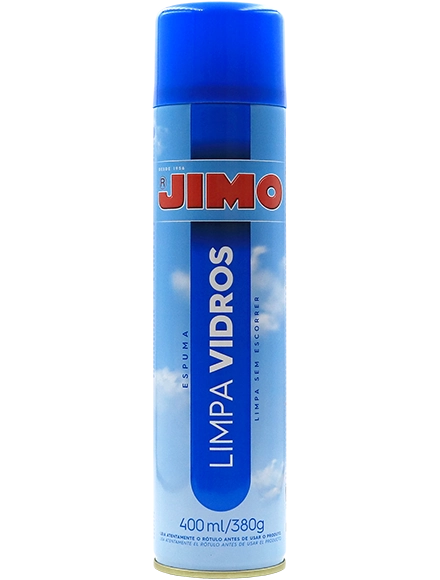
There are several versions, such as foam glass cleaner, which does not run, adheres better to the surface and does not require rinsing. Its mechanism ensures a uniform finish without streaks or stains.
As highlighted by Leonardo Linck, chemist and R&D director at JIMO:
When we developed the glass cleaner at JIMO, the idea was to create a product that solved customers’ main complaints. Liquid cleaners on the market would run quickly, seep into frames and cause stains. So we focused on three points: creating a product that does not run, that comes in aerosol form and does not require rinsing. When applied, it forms a foam that works on the dirt and can be easily removed with a cloth or paper, leaving the glass clean and shiny.
In addition to being practical, the glass cleaner offers safety: while homemade mixtures can react chemically and even release unwanted substances, the industrial product is tested and designed to ensure efficiency without compromising health or materials.
5 steps for quick and practical glass cleaning
Cleaning glass does not have to be complicated. With the right product and a few simple steps, it is possible to achieve full transparency on windows, mirrors and tables. The secret lies in preparation, tools and application technique. Check the step-by-step:
1. Choose the right cloth
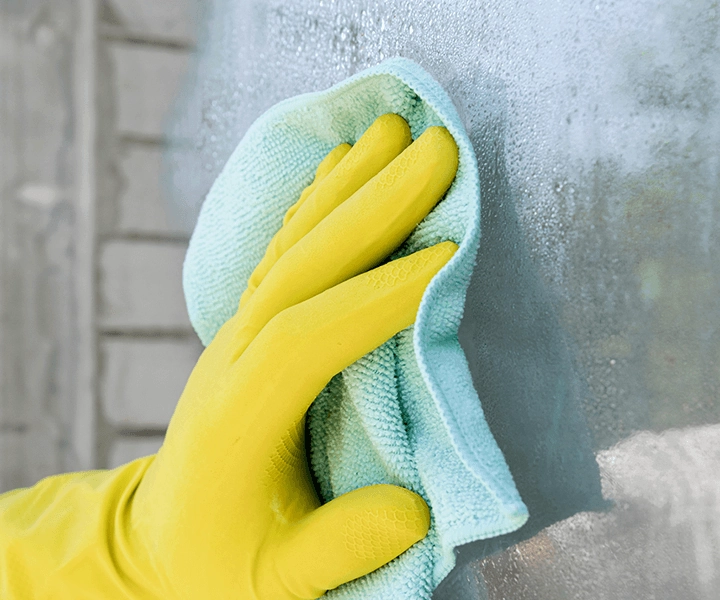
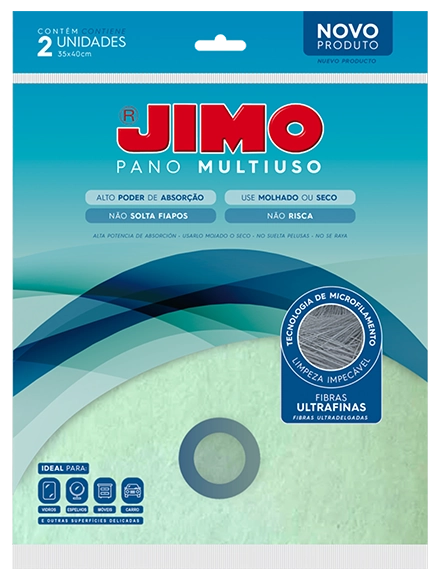
Prefer microfiber cloths or paper towels. They do not shed lint and help avoid scratches on the surface.
2. Apply the product correctly
Spray the glass cleaner directly onto the glass or cloth (in the case of screens). For large areas, divide into sections to prevent the product from drying before removal.
3. Clean with continuous movements
Use vertical or horizontal motions. Avoid circular movements, as they may spread the product unevenly and make removal more difficult.
4. Finish with a dry cloth
Wipe with a clean, dry cloth to add shine and ensure streak-free glass. This final touch makes all the difference and can prevent loss of shine even if you use too much product or scrub too hard (the two most common mistakes).
This simple process ensures efficiency and prevents the foggy appearance that often arises when the product is not properly removed.
5. Extra tip: quantity and application
Excess product may leave the glass foggy or with residue. This happens mainly when the cloth does not absorb all the applied product.
As highlighted by Leonardo Linck, R&D director at JIMO:
Fogging usually has nothing to do with product formulation, but with how it is used. When product remains on the surface and is not completely removed, the impression is of blurry or stained glass. The solution is simple: apply the right amount and always finish with a clean, dry cloth.
In addition, pay special attention to edges and films in the case of framed mirrors, since the product can damage the reflective layer. Therefore, application must be done carefully, avoiding foam buildup at the edges.
See also: 10 tips and best products for perfect glass cleaning
What types of glass cleaners exist and how to choose the right one?
The market offers different types of glass cleaners, each with strengths and limitations:
- Liquid spray: easy to find and practical for small areas, but tends to run and may leave marks on edges;
- Aerosol foam: creates a stable layer that works on dirt without dripping, does not require rinsing and ensures a uniform finish;
- Wet wipes: useful for quick cleanings, especially on smaller glass or while on the go.
- Homemade solutions: such as vinegar, alcohol or baking soda. They work in a limited way and do not offer the same effectiveness or safety as a specific glass cleaner.
The choice depends on the glass type, level of dirt and desired result: for quick use, sprays or wipes; for a flawless finish, foam stands out.
Advantages of JIMO Limpa Vidros
Among the available options, JIMO Limpa Vidros offers advantages that simplify daily cleaning:
- A foam aerosol formula that does not drip and does not require rinsing;
- Removes common dirt — such as dust, fingerprints and splashes — easily;
- Suitable for windows, mirrors and glass tables, delivering uniform shine in minutes.
These characteristics make the product the ideal choice for those seeking practicality and consistent results without rework.
Other JIMO foam solutions to complement cleaning
Besides glass cleaner, the JIMO line includes other foam products for different needs:
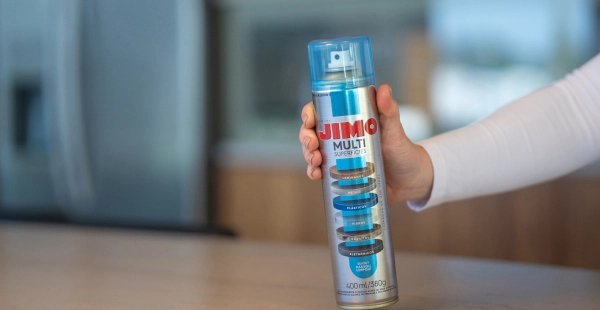
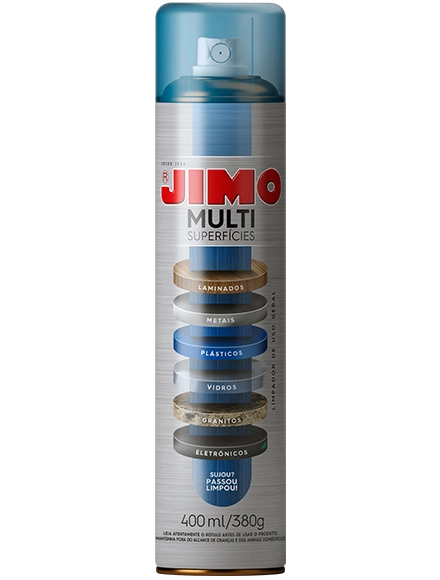
- JIMO Multi Superfícies: versatile, can be used on sinks, countertops, mirrors and other areas of the home;
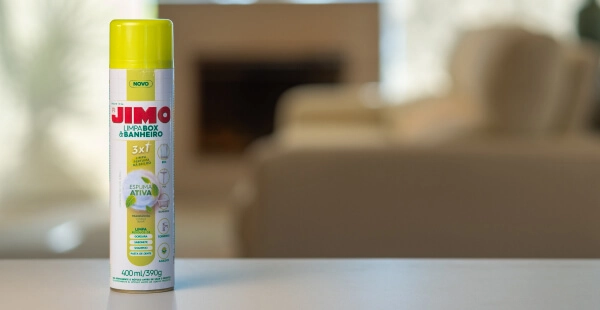
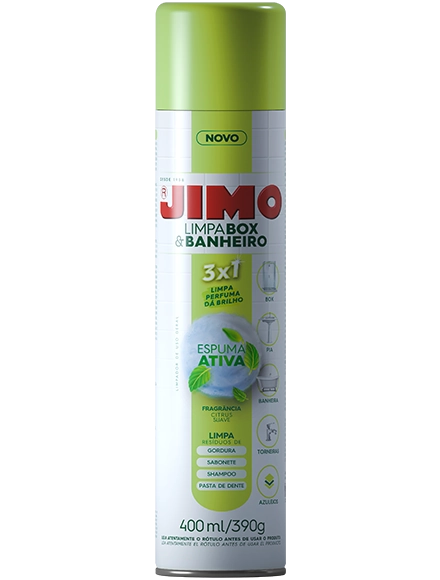
- JIMO Limpa Box: developed to remove soap and shampoo residue from shower enclosures as well as other bathroom surfaces;
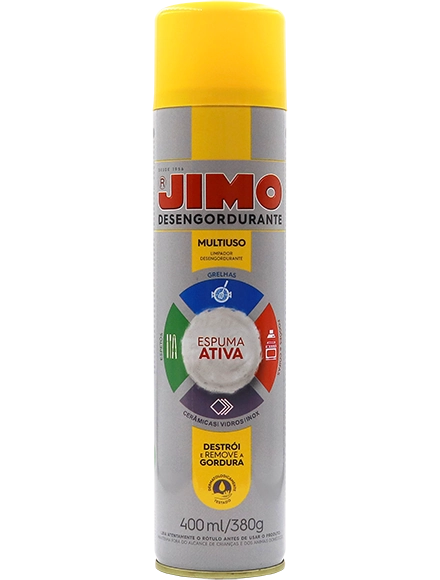
- JIMO Desengordurante: recommended for heavier dirt, works against embedded grease in kitchens and difficult surfaces.
These solutions complement each other, allowing each surface type to receive the appropriate care without improvisation.
Mirrors, car and screens: where can I apply it?
Glass cleaner can also be used on mirrors, screens and even automotive glass without film, as long as some important guidelines are followed.
Spotless mirrors without streaks
Using the product on mirrors is completely safe, but care must be taken with the edges. If the liquid or foam penetrates the inside, it may reach the reflective layer and damage the material.
The recommendation is to apply the product onto a cloth and spread gently, avoiding buildup around the edges.
How to clean car glass effectively
Many people look for homemade alternatives to clean car glass, but using a glass cleaner is more practical and safer. It can be applied both to the windshield and side windows, ensuring clarity without leaving marks.
As reinforced by Paola Magnus, chemist and R&D coordinator at JIMO:
Glass cleaner can be used on automotive glass with no problem. The only recommendation is to avoid using it on tinted windows, as we cannot test all versions available on the market. For these cases, always follow the instructions from the film manufacturer.
And screens?
For TVs, monitors and cell phones, the indication is to never apply the product directly onto the screen. The ideal is to spray it on a microfiber cloth and then wipe the surface, avoiding scratches or potential damage to the device.
With these precautions, it is possible to extend the use of glass cleaner to different surfaces while ensuring shine, clarity and safety in daily cleaning.
The above guidelines are general recommendations. Always read the product label before applying and follow the manufacturer’s instructions for the specific surface (such as automotive films and electronic screens).
If in doubt, test a small area before full cleaning.
Common mistakes when cleaning glass
Even with the right product, some habits can compromise glass cleaning and lead to unsatisfactory results. The most frequent mistakes include:
- Using newspaper or common paper: besides releasing ink, they may scratch the surface;
- Applying too much product: excess glass cleaner tends to leave foggy or streaky glass;
- Using rough sponges or steel wool: they can cause permanent scratches;
- Mixing homemade ingredients without guidance: combinations like vinegar and baking soda neutralize each other’s effectiveness and can even damage the glass
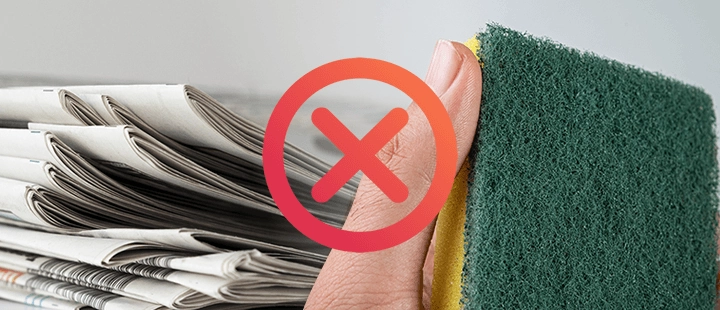
Avoiding these simple mistakes is the first step to ensuring streak-free glass and achieving more practical and long-lasting cleaning.
More content to check out
Stay updated on new tips, solutions and guidance for home and family care on JIMO’s blog:
- Mold: what it is and how to prevent wall mold at home | JIMO
- How to use the dishwasher correctly? Definitive guide! | JIMO
- How to get rid of termites? Tips for your home! | JIMO
Conclusion
In this content, you learned that keeping glass clean, streak-free and scratch-free is simple when the right product is combined with the right technique.
JIMO’s foam glass cleaner makes daily cleaning easier because it does not drip, does not require rinsing and ensures uniform transparency on windows, mirrors and even automotive glass.
By combining its action with the right accessory — such as microfiber cloths — and proper application, the final cleaning result will be a brighter surface, helping you see the world even more beautifully.
Frequently asked questions about glass cleaning
Can I use glass cleaner on mirrors?
Yes. The product is safe for mirrors when applied correctly. The recommendation is to avoid excess on the edges so that the liquid does not reach the reflective film on the back.
How to clean car glass using glass cleaner?
Glass cleaner can be used on automotive glass such as windshield and side windows. The only exception is for tinted glass, since compatibility cannot be guaranteed with all market variations.
How do I prevent glass from fogging?
Fogging typically occurs when product remains on the surface. Apply only the necessary amount and always finish with a clean, dry cloth to ensure streak-free glass.
Do homemade mixtures work as well as a glass cleaner?
No. Although popular, combinations like vinegar and baking soda can neutralize each other and even damage surfaces. Glass cleaner is formulated to act in a balanced way, ensuring effectiveness and safety.
Can I use glass cleaner on TV, computer or phone screens?
Yes, but never directly on the screen. The correct method is to apply the product onto a microfiber cloth and only then wipe the device, avoiding scratches and damage.
Practical solutions for your home
JIMO offers products designed to make your daily routine easier, with options for different types of application, insects/pests, surfaces and environments.
Find the ideal products to make your daily life easier.