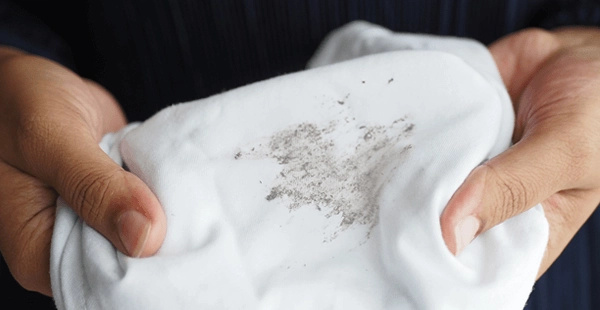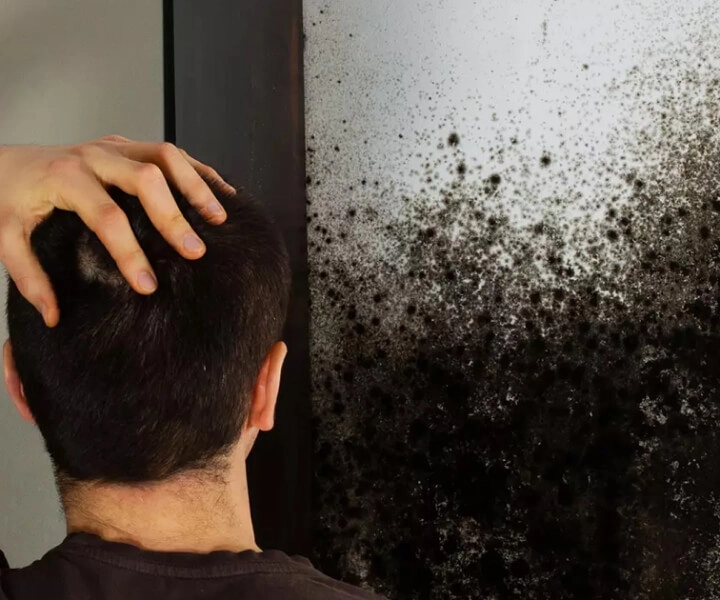
Mold is a common problem inside homes, especially in humid and poorly ventilated areas. It compromises the well-being of residents, affects the preservation of walls, clothes and objects, and can pose health risks.
In this guide, JIMO specialists explain what mold is, how to eliminate it effectively, which products to use, how to prevent it from returning, and more. Check it out.
What is mold?
Mold is a type of microscopic fungus that develops in environments with high humidity and little ventilation. As stated by chemist Paola Magnus, R&D Coordinator at JIMO:
Mold is a colony of fungi that develops in humid, warm and poorly ventilated environments. It is not just dirt — it is a living organism that spreads easily. In regions and areas with higher humidity levels, an ideal environment is created for mold to proliferate in homes, clothes and furniture.
Mold colonies appear as greenish, grayish or black spots on surfaces such as wood, fabric, paper, ceilings and walls. They aesthetically compromise the environment and also pose a health risk.
How does mold form on walls?
Mold multiplies when it finds ideal conditions: excess humidity, heat and lack of air circulation. Leaks, infiltrations, cold walls and objects stored in stuffy places are common triggers. Environments such as bathrooms, laundry rooms, closets and enclosed cabinets are especially prone.
Is mold harmful to health?
Yes, mold is harmful to health. Constant exposure to mold can cause or worsen respiratory problems such as asthma, bronchitis and rhinitis. It is also associated with allergies, eye irritation, skin irritation, throat irritation, headaches and general discomfort.
Beyond the aesthetic aspect, mold presents real health risks. It releases spores that can trigger allergies, rhinitis, asthma and other respiratory illnesses. Paola Magnus, Chemist and R&D Coordinator.
Children, the elderly and immunocompromised individuals are even more vulnerable, as well as pets, as we will address below.
Is mold also harmful to pets?
Yes, mold can seriously affect the health of pets. Just as it does in humans, the spores released by fungi in the environment are inhaled by pets and can cause a series of adverse reactions — especially in dogs and cats. Among the main symptoms observed are sneezing, coughing or difficulty breathing, as well as skin itching and redness.
What is the difference between mold and mildew?
Although many people use both terms as synonyms, mold and mildew have some differences that deserve attention:
Mold
It is the more developed stage of the fungus. It forms grayish, greenish or black stains on surfaces such as walls, wood and fabrics. Its smell is strong and persistent;
Mildew
It is the initial stage of mold growth, more superficial and whitish. It often appears on clothes, books, papers and food, and is easier to remove.
The difference between mildew and mold lies in the stage of development and the material affected. Identifying correctly helps you act quickly and avoid greater damage.
What is the relationship between mold and humidity?
The presence of mold is a clear sign that there is excess humidity in the environment — which directly affects air quality and may indicate structural problems. Natural factors such as temperature and sun exposure influence this scenario: the hotter and more exposed to sunlight an area is, the greater the release of vapor and the risk of condensation.
Humidity is the main trigger for mold growth. Fungi proliferate in humid, dark and poorly ventilated environments — which is why controlling humidity is the most effective way to prevent the problem. Paola Magnus, Chemist and R&D Coordinator at JIMO.
Proximity to seas, rivers and lakes naturally increases air humidity, favoring mold growth — especially in vacation homes or places that remain closed for long periods.
Poorly ventilated places, stuffy cabinets, infiltrations or structures like poorly insulated drywall create the ideal environment for fungal proliferation. Over time, constant humidity allows spores to settle on surfaces such as walls, fabrics and furniture, causing mold, mildew and unpleasant odors.
Below, see the chart with ideal humidity levels to avoid these problems and ensure thermal and respiratory comfort.
 In addition to damaging clothes and the structure of the house, this cycle can cause: thermal discomfort, difficulty drying clothes, lack of ventilation and, above all, the worsening of respiratory diseases such as rhinitis, asthma and bronchitis.
This is why maintaining good air quality is the most important step to eliminate mold and protect your family’s health.
Check out: complete line of JIMO anti-mold products
Which materials can contribute to mold?
Some materials are naturally more susceptible to moisture. Drywall, for example, often used in ceilings and divisions, easily absorbs humidity from the air, creating ideal conditions for mold and mildew.
In closets and wardrobes, conditions compromise clothes, sheets and shoes, which should be protected. Furniture made from MDF, plywood and particleboard also requires attention since they absorb water more easily, stimulating fungal proliferation.
Curtains, sofas, mattresses and bed linens also trap humidity without us noticing — until the signs appear: heavy air, frequent sneezing and a constant cold feeling.
Rugs and carpets are another critical point. In poorly ventilated areas or humid months of the year, they become true reservoirs of mold, mildew and dust mites.
How does mold affect different rooms in the house?
Mold doesn’t appear the same way in all areas of the home, although homes or apartments with south-facing facades are more prone to the problem due to lower sun exposure.
Inside the home, attention should be directed to specific points: “in places such as behind the bed, inside dressers and very closed cabinets, mold finds the ideal scenario to develop,” says Paola Magnus. See where it usually appears and what precautions to take:
Bathrooms
Shower vapor combined with low ventilation creates the perfect environment for mold to appear on walls, ceilings and grout. Damp towels also contribute to the problem.
Kitchen and laundry area
Hot vapors, walls with infiltrations and washing machines near cold walls can cause condensation and mildew, especially behind furniture and appliances.
Living room
Rugs, sofas, curtains and cushions absorb liquids and particles daily. When they don’t receive proper ventilation, they become a haven for fungi and dust mites.
Bedrooms and closets
Cabinets against external walls, clothes stored while still damp and poor air circulation transform these spaces into silent fungus hotspots.
What causes mold on clothing?
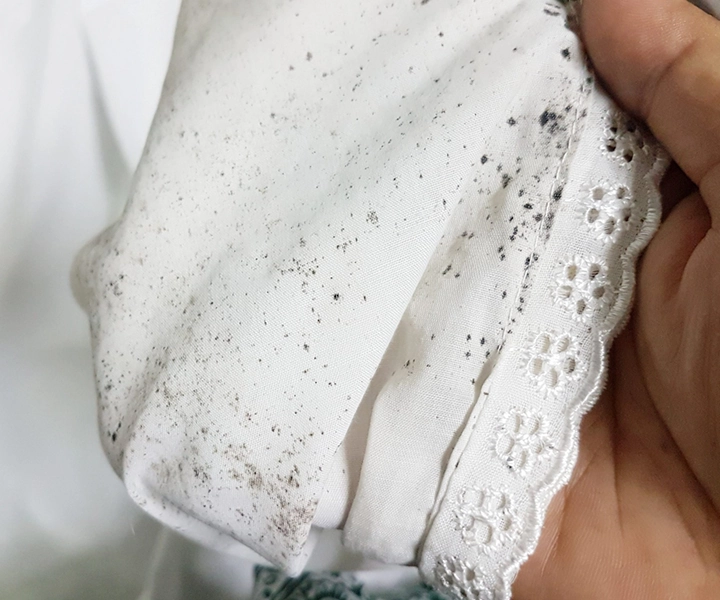
Clothes stored in humid and poorly ventilated places are one of mold’s favorite targets. When the air is saturated, fabrics such as cotton, wool and leather easily absorb moisture, becoming an ideal environment for fungal proliferation.
How to prevent mold in the wardrobe?
To protect your wardrobe, make sure clothes are completely dry before storing them. Avoid piling too many pieces and, whenever possible, open wardrobe doors to let air circulate.
Clothes stored in closed, dark and humid places — such as wardrobes leaning against cold walls — are highly susceptible to mold. They acquire that characteristic smell and may develop difficult-to-remove stains. Moreover, direct contact with mold may cause allergic skin reactions. Paola Magnus, Chemist and R&D Coordinator at JIMO.
Another essential measure is the use of anti-mold products in this and other areas of the house. Learn more in the next topic.
Learn more: How to protect your wardrobe from mold and humidity | JIMO
5 steps to eliminate wall mold for good
Eliminating mold requires more than a simple cleaning: it is necessary to address the source and keep air quality under control, preventing it from returning. Paola Magnus warns:
The biggest mistake is trying to remove mold with a dry broom or cloth. This only spreads the spores throughout the environment and worsens the problem. We always recommend cleaning with disinfectant or diluted bleach. These are effective options for eliminating fungi and reducing the chances of recurrence.
Check the 5 steps below:
- Start by investigating the source of the problem — leaks, water infiltration, cold walls or poor sealing may be the cause;
- Use gloves and masks for protection during cleaning. With a cloth or sponge dampened with diluted bleach, remove visible mold spots and eliminate bacteria and fungi with specialized products;
- After cleaning, dry the surface completely. This prevents fungi from returning;
- Ventilate the environment whenever possible. Open windows and air circulation are strong allies in mold prevention.
- Maintain protection with specialized anti-mold products, such as the JIMO Evita Mofo line.
By following this care routine, you’ll have more protection and prevention in your day-to-day life. In the next topic, we highlight the best anti-mold products and how to choose the ideal one.
Best anti-mold products and how to choose
As we have seen, the main action to prevent mold is identifying its source and eliminating humidity. After removing the colony and cleaning, it is time to maintain protection with specific products.
This is where the JIMO Evita Mofo line comes in, designed specifically to control air quality in humid and poorly ventilated environments. Check out the different types of solutions and their recommended uses.
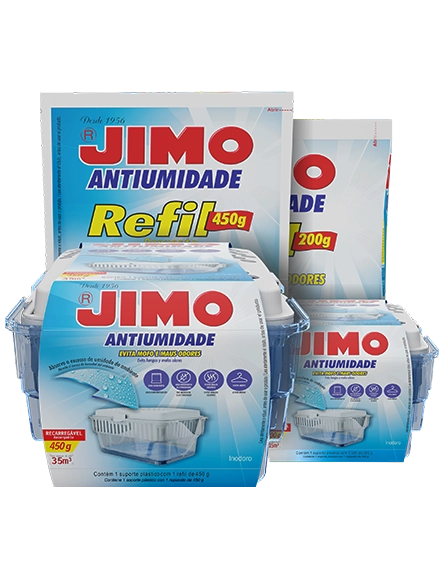
JIMO Antiumidade – Container
Ideal for cabinets, wardrobes, shoe racks and other closed spaces, the JIMO Antiumidade container (also called the device) uses absorbent crystals that capture excess humidity from the environment and turn it into liquid.
This prevents mold, mildew and unpleasant odors, keeping the environment dry for about 30 days, depending on humidity levels.
It is a practical, safe and efficient solution for ongoing prevention. Note: refills do not require discarding the plastic container — simply replace the refill with a new one.
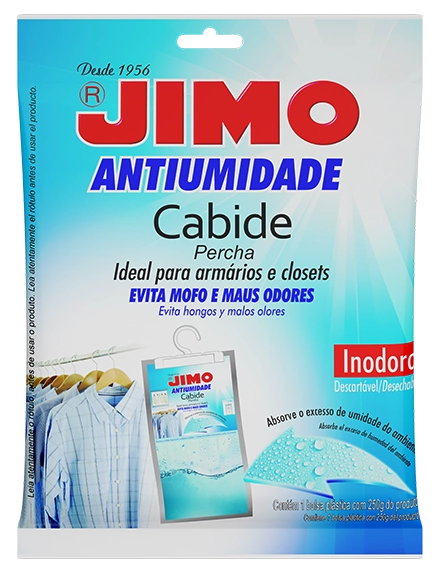
JIMO Antiumidade – Hanging sachet for wardrobes
With a compact format ideal for hanging, the JIMO Antiumidade hanging sachet is recommended for wardrobes, closets and small cabinets. Just like the container, it acts on air quality by keeping the space protected from mold formation.
With the JIMO Evita Mofo line, we can reduce the relative air humidity in small environments in a simple way, without the need for electricity or installation. The product absorbs excess humidity with silica, helping prevent mold, odors and even the proliferation of dust mites and fungi. It is ideal for wardrobes, dressers, under the bed and even bathrooms. Paola Magnus, Chemist and R&D Coordinator.
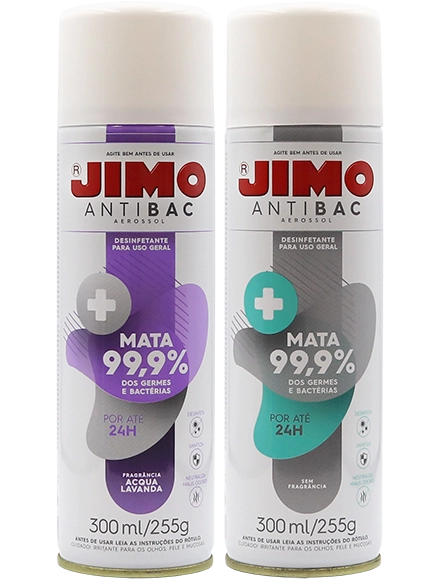
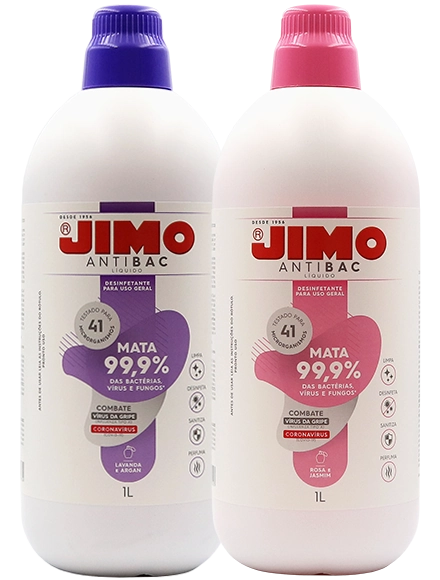
JIMO Antibac – beyond cleaning
Although not directly linked to mold prevention, JIMO Antibac is an important ally in cleaning and removing existing mildew colonies.
In addition to careful cleaning for removing spores on walls, ceilings or other surfaces, it is recommended to use the product at the end of the process. Cleaning alone is not enough: it is necessary to eliminate the mold spore, and this is what JIMO’s antibacterial aerosol does.
Can JIMO Antiumidade be used in any environment?
Yes, as long as the space is closed. The products from the JIMO Evita Mofo line are recommended for cabinets, drawers, shoe racks, storage boxes, closets and small bathrooms.
It is important to ensure that the product is well positioned and that the environment is sealed enough for moisture absorption to be effective. Avoid using it in fully open areas or places with constant airflow, where the product may lose efficiency.
See also: JIMO ProteColor: protection and satin finish for wood
Do homemade mold removers work?
Many people turn to homemade solutions such as vinegar, baking soda or alcohol in an attempt to remove mold stains. Although they seem easy and accessible alternatives, these methods do not address the real issue: poor air quality.
Cleaning the visible stain does not prevent fungi from growing again, especially if the environment remains humid and poorly ventilated.