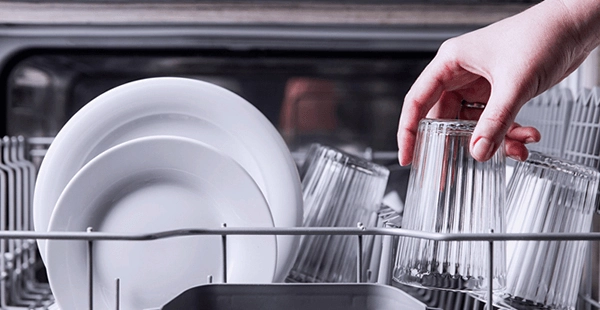
The dishwasher detergent is a specific product for machine use, formulated to remove grease and food residues without creating excess foam. It acts differently from sink detergent and helps protect filters, hoses, and internal components.
Choosing the right detergent and using the proper amount influences dish shine, drying time, and the machine’s performance over time.
In this content, you will understand what dishwasher detergent is for, how to use the product in daily life, and what to avoid in the machine to ensure efficient and safe cleaning.
What is dishwasher detergent for?
Dishwasher detergent is designed to remove:
- grease;
- food residues;
- stains efficiently during the machine’s cycle.
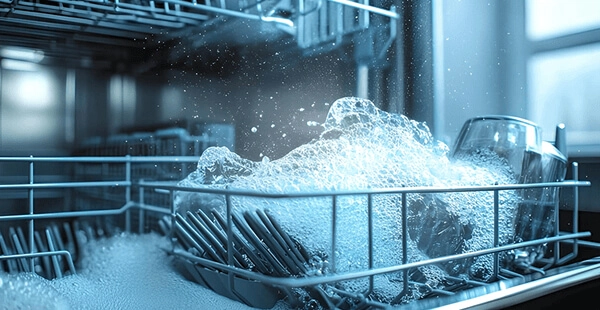
The formula works along with water pressure and temperature to loosen dirt and leave plates, glasses, cutlery, and utensils clean, without excess foam.
At the same time, the right product helps maintain the machine’s performance. Specific dishwasher detergent reduces residue buildup in filters, hoses, and spray arms, promoting proper water circulation and even distribution of the cleaning jets. This contributes to fewer odors, fewer blockages, and more stable cycles.
When used in the correct amount, dishwasher detergent helps avoid repeated cycles and contributes to saving water and energy.
Types of dishwasher detergent
When discussing the best detergent for dishwashing, the answer depends on the product format and type of washing. The products come in powder, gel, or tablets:
- powder versions allow more precise dose adjustments but require attention to avoid residues;
- gel detergents make it easy to control the dose and usually dissolve quickly during the cycle;
- tablets contain a pre-measured dose, simplifying daily use and preventing product waste.
In practice, the choice between powder, gel, or tablets depends on usage habits, level of dirt, and the machine manufacturer’s recommendations. Those seeking practicality tend to prefer tablets or gel, which are ready to use and help keep the routine more organized.
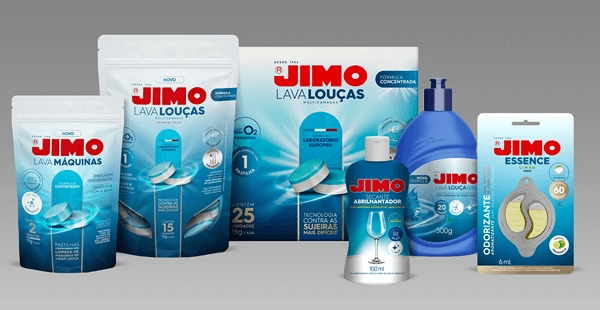
Regardless of the format, the priority is to use products specifically made for dishwashers, such as the JIMO line, developed to clean dishes, care for the machine, and simplify everyday kitchen tasks.
Main options from the JIMO Dishwasher line:
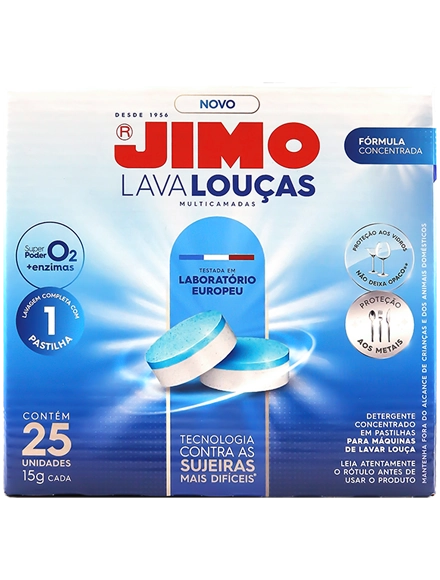
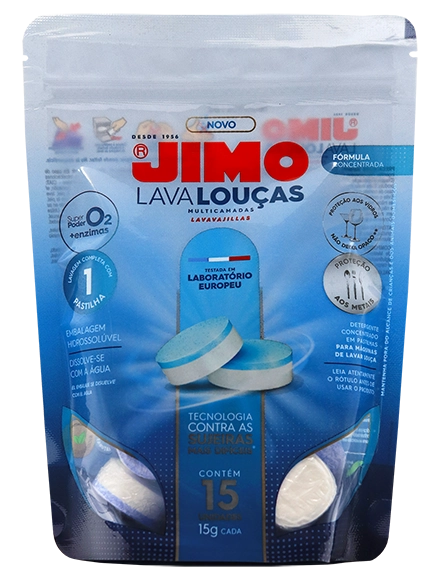
- JIMO Lava-Louças Pastilhas Multicamadas: tablets that combine cleaning, grease removal, and care for glass and stainless steel in a single application;
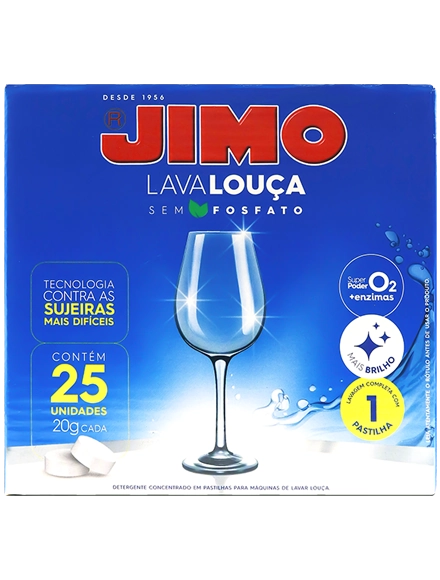
- JIMO Lava-Louças Pastilhas: tablets for daily use that dissolve during washing and remove common everyday dirt;
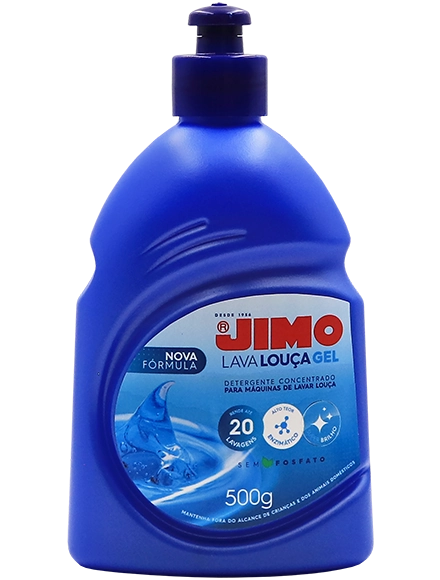
- JIMO Lava-Louças Gel: gel detergent that allows dose control for each cycle and adjusts usage to the level of dirt;
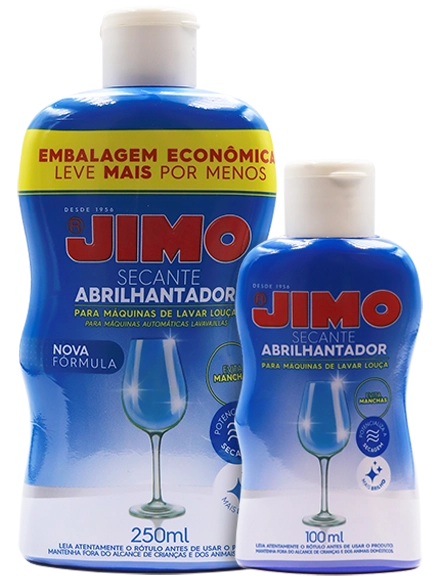
- JIMO Secante Abrilhantador de Louças: drying aid placed in the dishwasher reservoir. It reduces water spots and improves the shine of glasses, stemware, and cutlery;
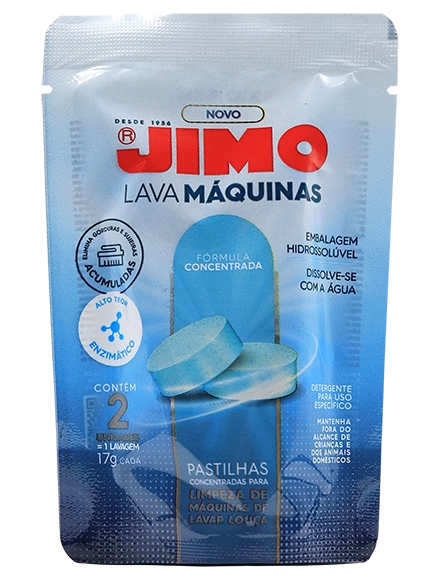
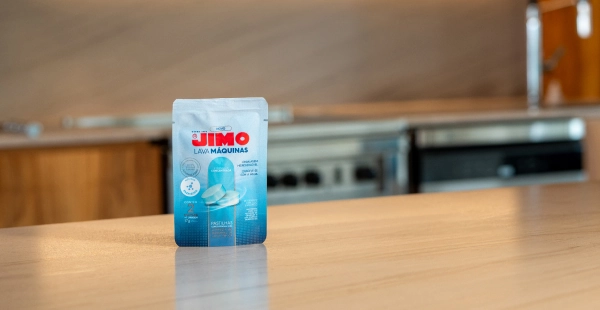
- JIMO Lava Máquinas de Louças Pastilhas: tablets with high enzymatic content that clean the inside of the dishwasher, removing accumulated dirt;
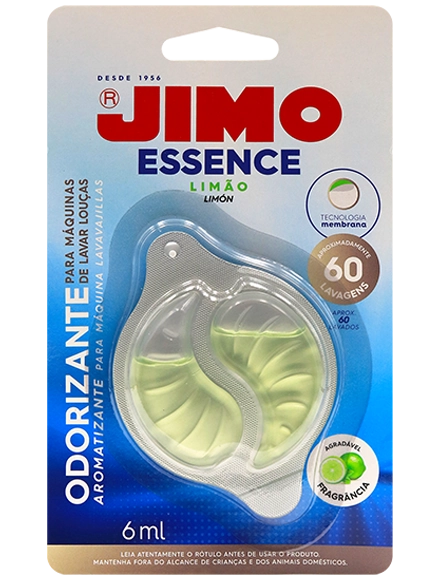
- JIMO Essence Limão: a holder with a citrus scent released gradually inside the machine, without sticking to dishes.
When choosing dishwasher detergent, check whether it was specifically developed for dishwashers and if it is compatible with your machine model.
How to use dishwasher detergent?
Proper detergent use helps avoid excess foam, spots, and repeated cycles. Always check the machine manual and product label for the appropriate compartment, approximate amount, and suitable cycle for each dirt level.
Where to put the detergent in the machine
In domestic dishwashers, the detergent goes into a specific compartment, usually inside the door. Fill it to the indicated marking and close the lid.
During the cycle, the machine releases the product at the right moment, according to the selected program.
What is the ideal amount of detergent?
Dosage varies depending on the product, machine, dish load, and dirt level. Use the compartment markings as a reference and adjust only if the dishes are very greasy or not too dirty.
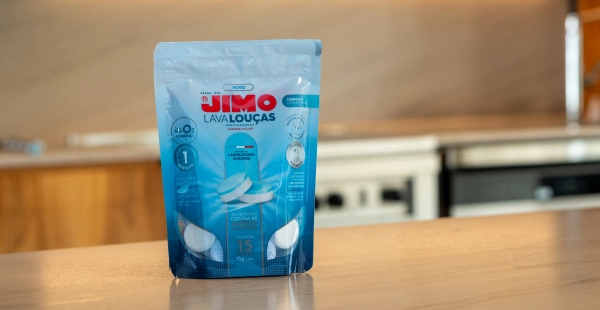
For JIMO Lava-Louças Pastilhas Multicamadas, one tablet per cycle is enough for complete and effective cleaning.
Excess detergent can cause cloudy glasses, strong odors, and residue in the filter. Too little product leaves visible grease, stains, and may require an additional cycle.
Quick step-by-step guide
After understanding where to place and how much detergent to use, follow this simple routine:
- remove large food residues from plates, pans, and utensils;
- arrange the dishes in the racks without blocking the spray arms;
- select the washing cycle according to the dirt level;
- place the detergent in the indicated compartment and close the lid;
- use drying liquid to complete the washing. Check the reservoir and refill if necessary;
- close the door and start the program.
Drying liquid: applications and uses
The drying liquid is stored in a dedicated reservoir inside the machine and acts in the final stage of washing. It helps water slide off surfaces more easily, reduces water spots, and enhances the shine of glasses, stemware, and cutlery.
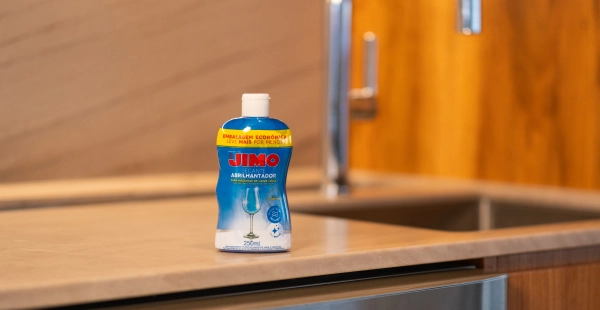
Specific products for this step, such as JIMO Secante Abrilhantador de Louças, are formulated to work with the dishwasher cycle without damaging rubber components, metals, or internal parts. Ideally, choose a product suitable for the machine and follow the manufacturer’s guidelines.
Is it mandatory to use drying liquid in a dishwasher?
Using drying liquid is not mandatory, but it makes a noticeable difference, especially in areas with hard water, in high-temperature cycles, and on glass or stainless steel items that stain easily.
When the dishwasher does not dry properly, the issue is often an empty reservoir, low drying liquid setting, or the use of eco cycles that generate less heat during the final stage.
What not to use in the dishwasher?
It is also important to understand what should stay out of the dishwasher. Some items may work well in the sink but create excess foam, leave residues, and accelerate wear on internal parts when used in the machine.
Cleaning products not designed for dishwashers
Regular sink detergent is not recommended for dishwasher use. The formula produces foam in quantities unsuitable for the machine, which may cause leaks, residue buildup, and cycle failures.
Other products not developed for this type of equipment include:
- bar soap;
- hand soap;
- cleaning pastes.
Mixtures with excess soap and combinations of different products can damage filters, pumps, and hoses. They also leave more residue on plates, glasses, and cutlery.
Homemade recipes and substitutes that harm the machine
Vinegar, baking soda, and other homemade solutions can be useful in general cleaning, but they do not replace dishwasher-specific detergent or drying liquid.
With frequent exposure to high temperatures and internal components, these substances can wear out rubber parts, alter metal surfaces, and compromise washing performance.
The safest option is to follow the machine manufacturer’s recommendations and use appropriate products.
Dishwasher care
Taking care of the machine helps the detergent work better and avoids rework. Clean the filter regularly by rinsing it under running water, and check for particles blocking the spray arm nozzles, removing them with a brush or toothpick.
At regular intervals, run a specific cleaning cycle with a product designed for the inside of the machine.
The JIMO Lava Máquinas de Louças tablets act on grease, residues, and buildup in hoses, filters, and spray arms. This routine reduces odors, keeps components in good condition, and helps preserve cycle performance.
The right detergent, the protected machine
The choice of dishwasher detergent directly affects cleaning quality and the machine’s lifespan. Using specific products, following the equipment manual, and adjusting dosage according to the dirt level help prevent excess foam, stains, and repeated cycles.
The JIMO Dishwasher line includes gel options, tablets, drying aids, and machine-cleaning tablets, designed to remove grease, care for glass and stainless steel, and maintain the equipment’s interior in good condition.
Incorporating these products into your routine delivers more predictable results and makes dishwasher use simpler day to day.
Frequently asked questions about dishwasher detergent
Which detergent should I use in the dishwasher?
Always use detergent specifically for dishwashers — in gel, powder, or tablet form. Machine-specific products control foam, remove grease, and help protect the equipment.
Can I use regular detergent in the dishwasher?
No. Sink detergent creates excess foam, may cause leaks, leave residue on dishes, and damage filters, pumps, and hoses.
Can I use vinegar instead of drying liquid?
Vinegar does not replace dishwasher drying liquid and may damage rubber and metal parts with frequent use. For shine and drying, always prefer drying products made for dishwashers.
How do I know the correct amount of detergent?
Follow the instructions on the label and the compartment markings. If dishes come out greasy or with residues, adjust the dose gradually until you achieve the desired result.
What is the best detergent for dishwashers?
The best detergent is the one specifically designed for dishwashers, in gel or tablet form, recommended by the manufacturer. It controls foam, removes grease, and protects the equipment.
What can replace dishwasher detergent?
Improvised substitutes like vinegar or homemade mixtures do not offer the same performance and may damage machine components if used frequently. In practice, there is no safe “replacement” for dishwasher drying liquid, so the recommendation is to keep the reservoir filled with a proper product for this function.
Practical solutions for your home
JIMO offers products developed to simplify your everyday life, with options for different types of applications, insects/pests, surfaces, and environments.
Find the ideal products to make your daily routine easier.