Neste Artigo 
Neste Artigo
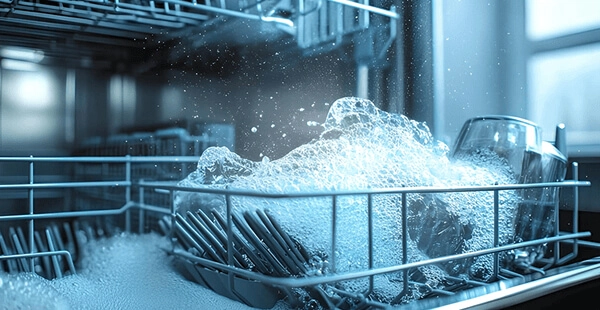
The dishwasher gel detergent was developed to remove grease and food residues in automatic machines without forming excessive foam. When used correctly, the product improves cleaning, prevents stains, and helps preserve utensils such as plates, glasses, and cutlery.
Unlike regular sink detergent, which can compromise the machine’s operation, dishwasher-specific detergent has a formula designed for automatic wash cycles.
Below, see what dishwasher gel detergent is used for, why to use it, and 5 tips to achieve better day-to-day results.
What is dishwasher gel detergent used for?
Dishwasher gel detergent was developed to clean utensils in automatic machines efficiently and safely. Its formula works during wash cycles to remove grease, food leftovers, and dirt that remain adhered to dishes after use.
Unlike common cleaning products, dishwasher-specific detergent is formulated to work together with water circulation, cycle temperature, and the machine’s rinse system.
This balance allows for complete cleaning without compromising the equipment’s operation. Among the main functions of dishwasher gel detergent are:
- removing grease and food residues;
- promoting deep cleaning of plates, glasses, and cutlery;
- preventing excessive foam formation during the cycle;
- protecting glassware and utensils against stains or cloudiness.
This type of product also makes rinsing easier and contributes to a more uniform washing result.
Can you use regular detergent in the dishwasher?
No. Regular detergent has different characteristics and can cause problems during washing, such as excessive foam formation inside the machine, damage to the equipment’s operation, and compromised rinsing and cleaning processes.
For this reason, the use of dishwasher-specific detergents is always recommended. These products are formulated to work in a balanced way within the machine’s system, respecting the dynamics of water circulation, temperature, and rinsing during wash cycles.
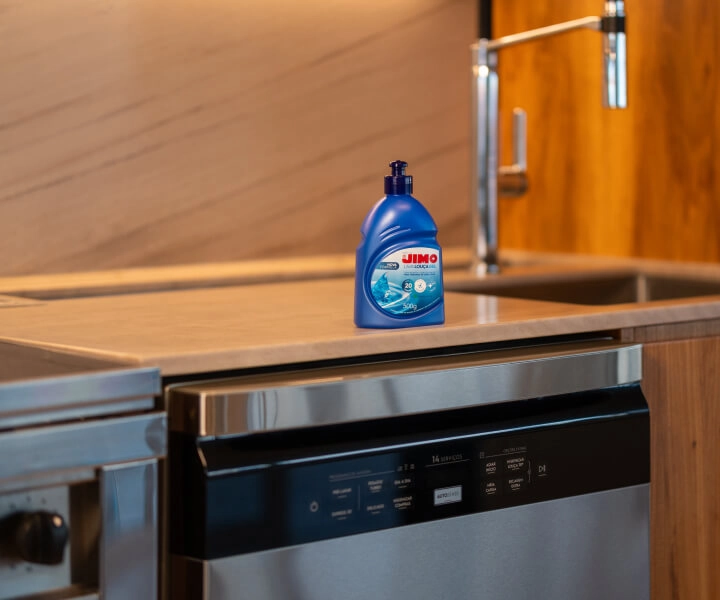
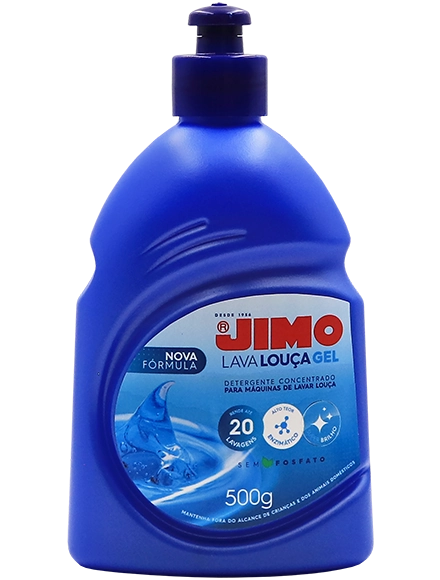
One example is JIMO Lava-Louças Gel, developed especially for cleaning utensils in dishwasher machines.
JIMO Lava-Louças Gel: gel detergent for efficient cleaning
The concentrated formulation of JIMO Lava-Louças Gel works to remove grease, food residues, and dirt that remain adhered to dishes after use.
The presence of enzymes in its composition helps break down food particles and facilitates the removal of tougher dirt during the wash cycle. This process contributes to more complete cleaning of plates, glasses, cutlery, and other utensils.
Among the main features of the product are:
- concentrated formula, which contributes to efficient cleaning;
- enzymatic power, which helps remove food residues;
- chlorine-free and phosphate-free formulation;
- approximate yield of 20 washes per 500-gram package.
Another important point is ease of use. The gel format makes it easier to dose the product according to washing needs, allowing the amount to be adjusted based on the level of dirt on the dishes.
When used correctly, gel detergent helps keep dishes clean and the machine functioning properly over time.
5 tips for using gel detergent in the dishwasher
Proper use of gel detergent makes a difference in washing results. Small daily practices help improve dish cleaning, prevent stains, and ensure proper machine operation.
Check out some guidelines to help you make better use of gel detergent in the dishwasher.
1. Use the correct detergent dosage
The amount of detergent used directly influences washing efficiency.
Excess product can leave residues on dishes or make rinsing difficult. An insufficient amount can reduce the ability to remove grease and food leftovers.
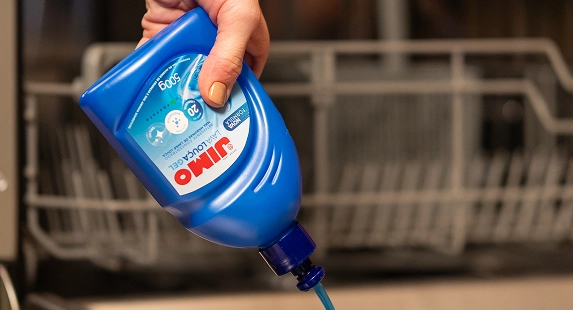
The recommended dosage for JIMO Lava-Louças Gel is 25 ml per wash, equivalent to approximately 3 tablespoons. The product should always be placed in the machine’s detergent compartment, ensuring it is released at the correct moment during the wash cycle.
2. Place the detergent in the correct compartment
Dishwashers have a specific detergent reservoir located on the inside of the equipment door.
This compartment is responsible for releasing the product at the appropriate moment of the cycle, when water is already circulating and ready to begin the cleaning stage.
Placing detergent directly inside the machine can impair washing performance, as the product may dissolve before the correct moment. Therefore, always use the compartment indicated by the machine manufacturer.
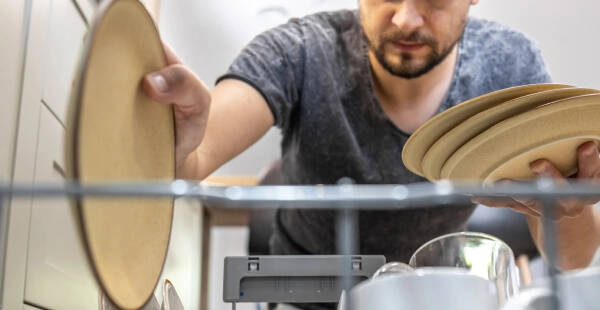
3. Organize dishes properly inside the machine
The arrangement of utensils influences water circulation and detergent action during the wash cycle. Some practices help improve results:
- avoid overlapping plates and bowls;
- keep cutlery separated in the basket;
- leave space between utensils to allow water circulation
When items are too close together or poorly positioned, water and detergent may not reach all surfaces. This can result in dirt residues after washing.
4. Use rinse aid to prevent stains
Rinse aid is an important complement in the dishwasher washing process.
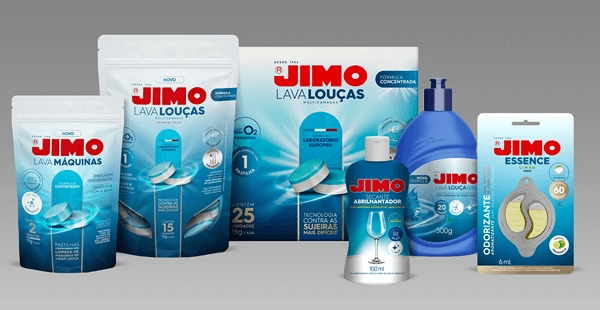
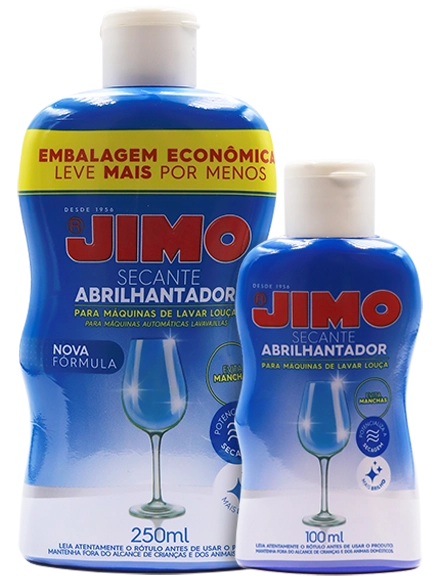
Products such as JIMO Secante Abrilhantador help improve the final washing result by enhancing the drying process, reducing water spot formation, and leaving glasses, plates, and cutlery with a more intense shine
The product should be placed in the machine’s specific rinse aid reservoir. During the wash cycle, the dishwasher automatically releases the liquid in the final rinse.
5. Keep the machine clean and odor-free
With continuous use, grease residues and food particles can accumulate inside the dishwasher. This buildup can cause unpleasant odors and reduce washing efficiency.
To keep the equipment in good working condition, it is important to perform periodic cleaning of the machine.
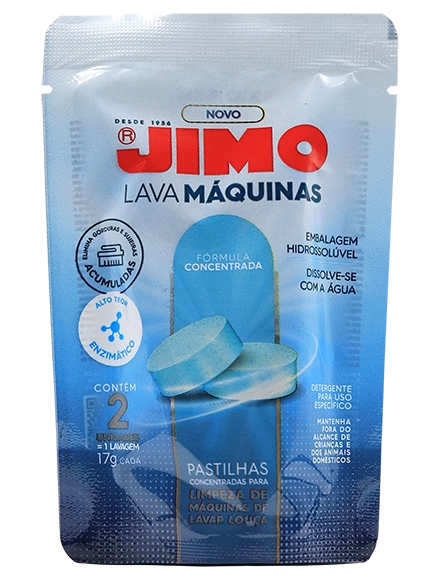
One solution is to use JIMO Lava-Máquinas de Louças, developed to remove grease residues accumulated inside the equipment and help maintain dishwasher performance.
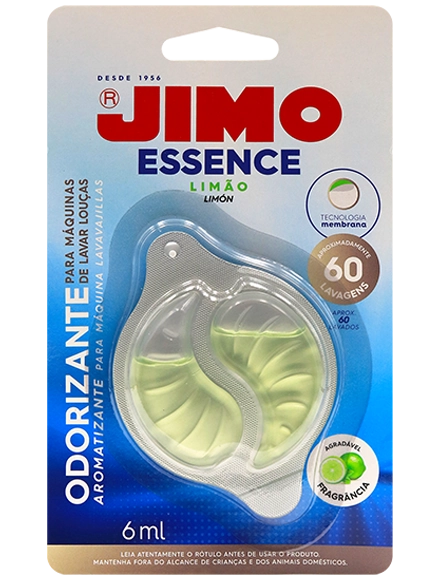
Another option is JIMO Essence Limão, which leaves a pleasant fragrance inside the machine. The product helps keep the internal environment fresher without transferring scent to the dishes.
Gel detergent, tablet, or powder: which one to choose?
There are different formats of dishwasher detergent. Each has its own usage characteristics and may better suit different washing routines. See:
- gel detergent is often chosen by those seeking practicality in dosing. As the amount can be adjusted according to the level of dirt on the dishes, it allows greater control in daily use;
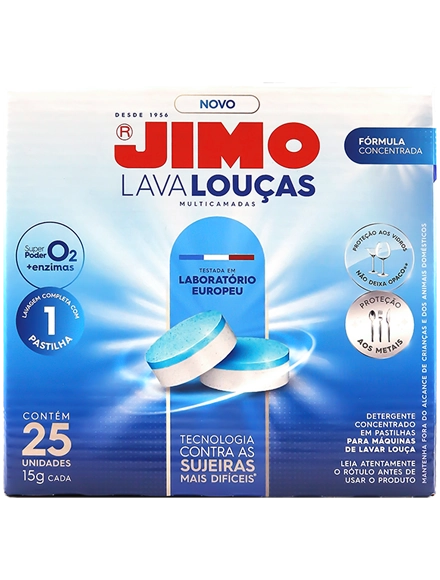
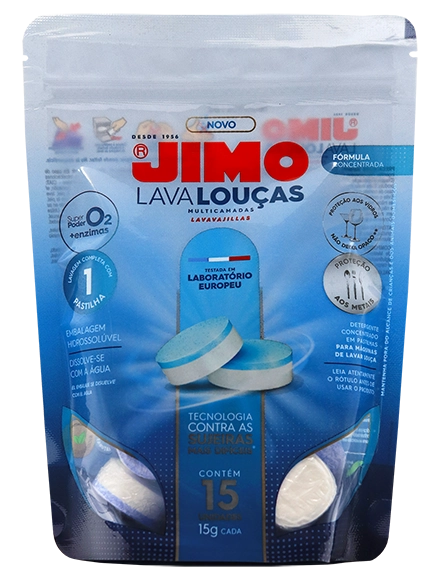
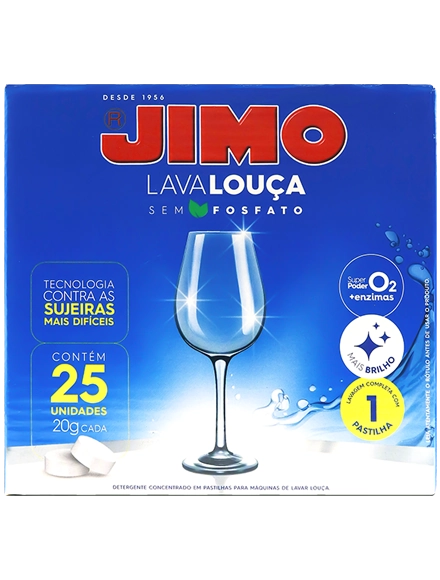
- tablets offer convenience, as they come with a single dose for each wash. Just place one unit in the machine’s detergent compartment;
- powder detergent also allows dosage adjustment, but requires more attention to the amount used to avoid excess or shortage of product.
Regardless of the chosen format, the most important thing is to use detergents developed specifically for dishwashers, ensuring efficient cleaning and proper equipment operation.
Common mistakes when using gel detergent in the dishwasher
Some habits can impair washing results and machine operation. One of the most common mistakes is replacing dishwasher gel detergent with regular sink detergent, which generates excessive foam and can compromise the equipment’s cycle.
Another important point is the incorrect dosage of gel detergent. Excessive amounts can leave residues on dishes, while insufficient amounts reduce efficiency in removing grease and food leftovers.
It is also essential to place the product in the machine’s specific compartment, which releases the gel detergent at the correct moment of the cycle. In addition, poorly positioned utensils can hinder water circulation and detergent action during washing.
Avoiding these simple mistakes helps ensure better dishwasher performance and more efficient dish cleaning results.
Learn more: Dishwasher soap or detergent: how to choose products for dishwashers?
Using the right detergent makes a difference in results
In this content, you learned what dishwasher gel detergent is used for, how to use it correctly, and which practices help improve washing results.
Small precautions, such as using the correct dosage, positioning dishes properly, and keeping the machine clean, contribute to more efficient day-to-day cleaning.
Using products developed for dishwashers, such as JIMO Lava-Louças Gel, also helps ensure better equipment performance and more consistent dishwashing results.
Frequently asked questions about dishwasher gel detergent
Can I use gel detergent to wash dishes manually?
No. Dishwasher gel detergent was developed exclusively for use in automatic machines. Its formulation is designed to work together with wash cycles and water circulation inside the equipment. Therefore, it should not be used for manual washing.
How many washes does a dishwasher gel detergent yield?
Yield may vary depending on the brand and dosage used. In the case of JIMO Lava-Louças Gel, a 500-gram bottle yields approximately 20 washes, considering the recommended dosage of 25 ml per cycle.
Does gel detergent work in any dishwasher?
Yes, as long as the machine has an appropriate detergent compartment. It is important to always follow the equipment manufacturer’s guidelines and use the recommended dosage for each wash.
Does gel detergent remove heavy grease from dishes?
Yes. Dishwasher-specific detergents usually have concentrated formulations that help remove grease and food residues. Products with enzymatic action, such as gel detergent, help break down dirt particles during the wash cycle.
Can gel detergent be used in short wash cycles?
Yes. The gel format tends to dissolve quickly, which allows it to be used in different machine programs, including shorter cycles, depending on the level of dirt on the dishes.
Is it mandatory to use rinse aid?
Using rinse aid is not mandatory, but it improves drying and helps prevent stains on dishes.
Does gel detergent work in short cycles?
Yes. Gel detergent has fast dissolution and can work well in both short and long wash cycles.
Practical solutions for your home
JIMO offers products developed to make your daily life easier, with options for different types of application, insects/pests, surfaces, and environments.
Find the ideal products to make your daily life easier.